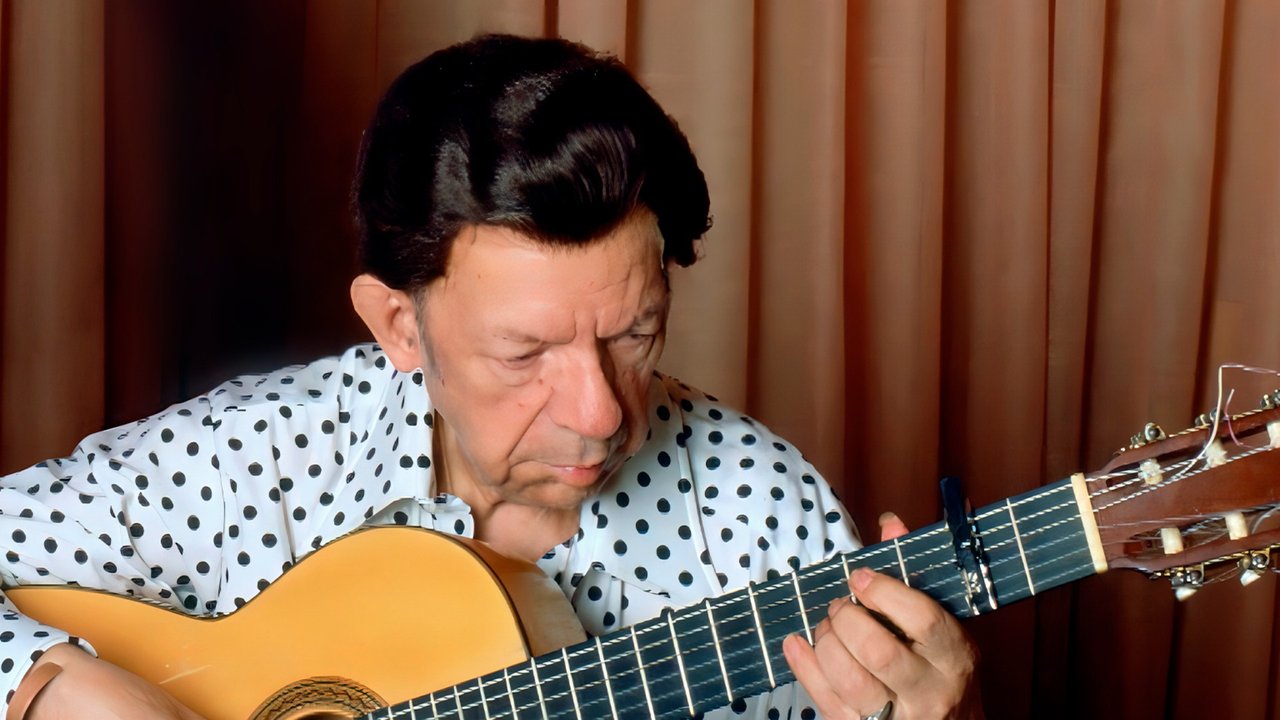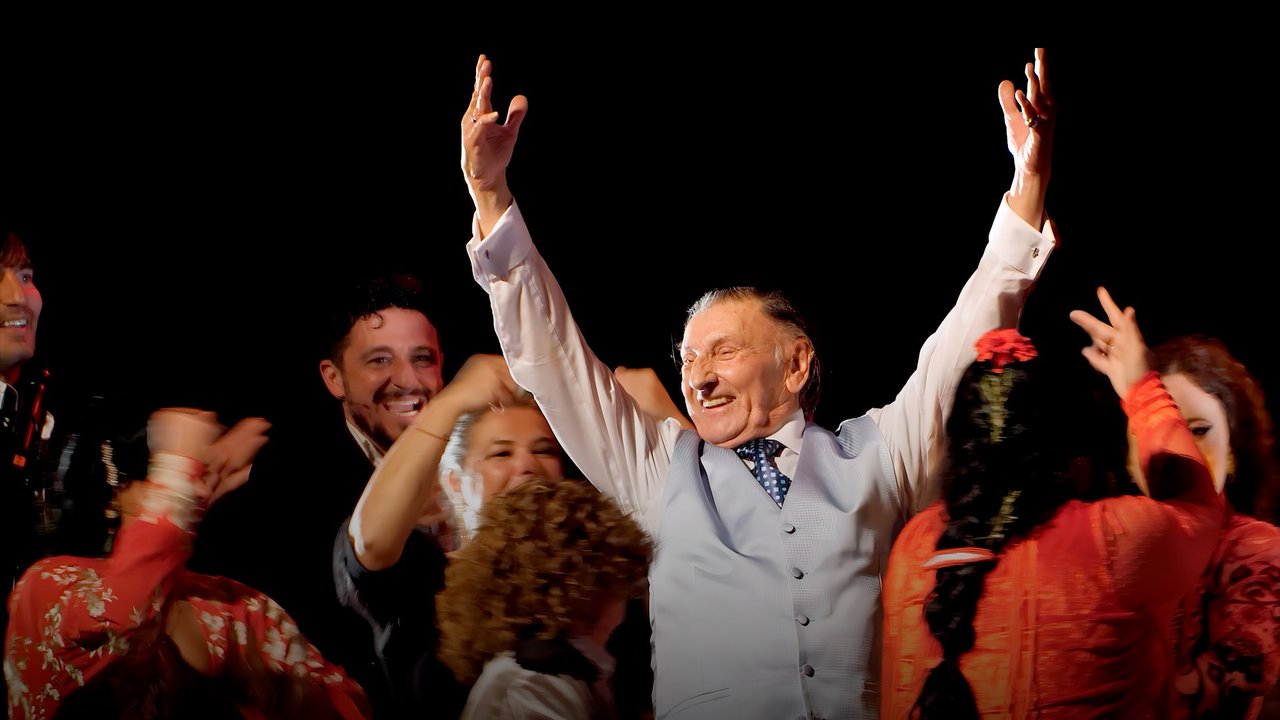
The first money Pepe Habichuela ever made with a guitar came from walking up the hills of the Sacromonte with the instrument on his back, looking for a few coins in the zambras —the flamenco gatherings held in the caves of Granada’s gypsy quarter. He was a small boy, and he had an aunt, Marina la Habichuela, who took him up there along with his brothers Juan and Luis. The last time he was seen on a stage was in the summer of 2024, already ill, at the tributes paid to him in Madrid and Pamplona. Between those two moments lie sixty years, thirty of them behind the voice of Enrique Morente, and a flamenco guitar that ended up playing alongside an Indian string orchestra and the double bass of an American jazz musician.
José Antonio Carmona Carmona died on Tuesday 4 August 2026 in Madrid, aged 82, of a lung disease. He was buried in Granada.
A Surname That Was a Trade
The Habichuelas are not a family with a guitarist in it: they are a family of guitarists. The nickname was put into circulation by his grandfather, Habichuela el Viejo; it carried on through his father, José Carmona; and of his brothers —Juan, Carlos and Luis— three more guitarists emerged. Pepe was the grandson, son, brother, father and uncle of flamenco musicians, which is an exact way of saying that he never chose the trade: he was born inside it.
Of those early years he said himself, in Revista La Flamenca: «In the late fifties I went up to the Sacromonte, to the caves, to play, to listen, to learn and to enjoy everything there was in those days. I stayed until ’62.» There is no conservatory in that sentence. There is a neighbourhood, some caves and a boy listening.
His Brother’s Phone Call
The break came in 1964, and it came by telephone. Juan, the eldest, had a residency at the Madrid tablao Torres Bermejas and was leaving on an international tour; he rang Granada so that his brother could take his place. Pepe arrived in Madrid at twenty and made his debut there.
Torres Bermejas in the sixties was less a job than a university with no tuition fees. Across that stage passed Manolo Caracol, Terremoto, La Paquera, Juanito Valderrama, Pepe Marchena, el Güito, Mario Maya and a very young man from Cádiz called Camarón de la Isla. Habichuela summed it up like this: «you learned just from talking to them.» It was also where he met Amparo Bengala, a bailaora —a female flamenco dancer— at the tablao, whom he married.
That venue also gave him a technical trait he kept for life. Playing without amplification in large, noisy rooms forces you to pull volume out of the body of the guitar, and out of that came the powerful rasgueado that made him recognisable from the first bar. The curious thing is that this same man of the forceful right hand was, according to everyone who worked with him, the gentlest of accompanists.
Thirty Years Behind Enrique Morente
At some point in the seventies he did something nobody in his trade did: he gave up the steady wage of the tablao to shut himself away and work with a singer from Granada who was not yet Enrique Morente. There were months with no income, kept afloat by his wife’s earnings as a dancer. Out of that came two records, both in 1977: Homenaje a don Antonio Chacón and Despegando.
That gamble founded one of the decisive partnerships in twentieth-century flamenco. Morente supplied the voice and the nerve; Habichuela, the ground beneath it. They kept recording —Negra, si tú supieras, in 1992— and he accompanied him on stage almost until Morente’s death in 2010. When it happened, Habichuela said it in one line: «I have lost a brother, an unequalled poet and a unique musician.»
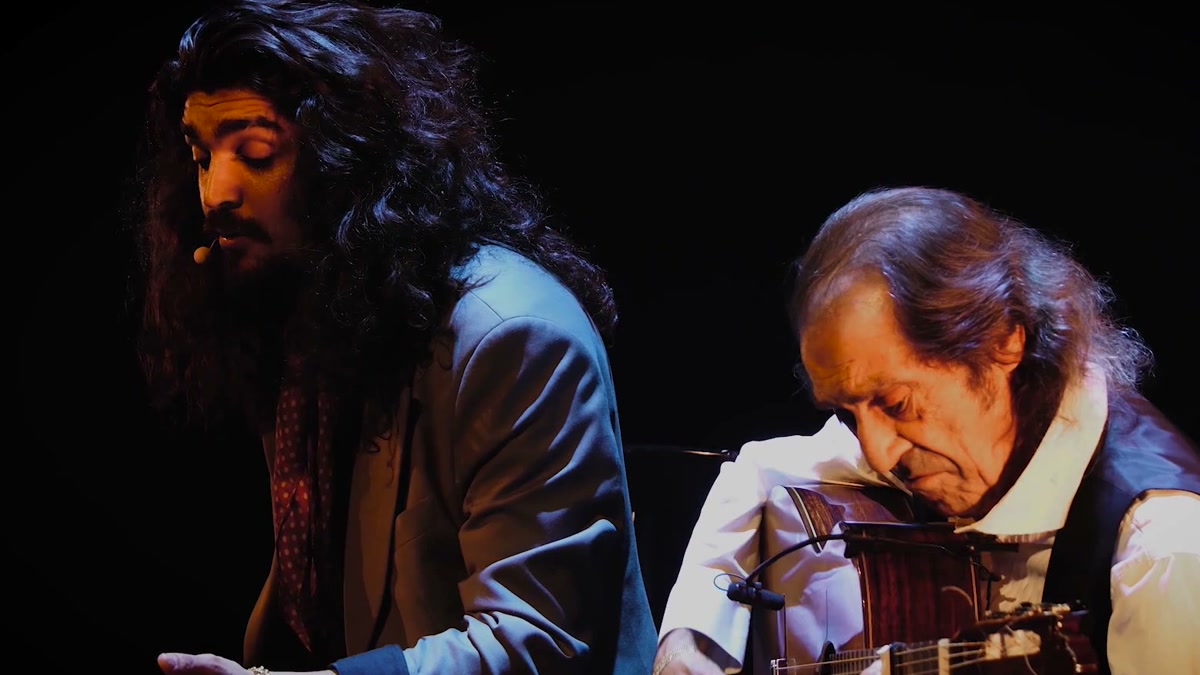
BIO
Where was he born?
Granada (Andalusia), 1944. Real name: José Antonio Carmona Carmona
Family
Grandson of Habichuela el Viejo, who gave the dynasty its nickname, and son of the guitarist José Carmona
Brothers: Juan (1933-2016), Carlos and Luis, all three guitarists
Married to the bailaora Amparo Bengala
Father of Josemi Carmona, of Ketama; uncle of Antonio Carmona and of Juan José Carmona «El Camborio»
Born – died
1944, Granada
4 August 2026, Madrid (lung disease). Buried in Granada
How His Guitar Sounded
Almost all the flamenco anyone remembers is remembered for the person singing or the person dancing. Accompaniment is the invisible trade: you have to hold the singer up without covering them, breathe with them, never get ahead, and know that the applause is not for you. Habichuela did that for half a century, and those who lived it from the other side of the stage always describe it the same way.
«He was all sweetness. His playing wasn’t aggressive. He played very sweetly, very beautifully, letting the cantaor sing.» The guitarist Curro, on how he accompanied.
«As an artist he was different, all heart. He wasn’t a musician who read scores, but he had the music inside him.» The cantaor Jaime Heredia «El Parrón».
«He wasn’t a musician who read scores» is not a criticism: it is the description of an entire school. Habichuela belonged to the generation —that of Paco de Lucía and Manolo Sanlúcar— that rewrote what could be done with six strings without ever having read a stave.
The Guitar That Went to India and Came Back with Jazz
His solo career started late and without haste. A Mandeli, released by Nuevos Medios, was the first record with his name alone on the cover; Habichuela en rama is the one usually cited as his major work. But what put him on a different map was Yerbagüena (2001), recorded with The Bollywood Strings: flamenco guitar and Indian classical strings playing together, with neither acting as decoration for the other. Nobody had taken the instrument that far, and not in a figurative sense.
Along the way he played with the trumpeter Don Cherry and the bassist Jaco Pastorius. And on Hands he joined the jazz double bassist Dave Holland, with whom he toured the European festival circuit. All of it done by a man who still defined himself, above all else, as an accompanist.
Essential Discography
- Homenaje a don Antonio Chacón (1977), with Enrique Morente
- Despegando (1977), with Enrique Morente
- A Mandeli, his first solo record (Nuevos Medios)
- Negra, si tú supieras (1992), with Enrique Morente
- Habichuela en rama
- Yerbagüena (2001), with The Bollywood Strings
- Hands, with Dave Holland
The Dynasty Carried On Without Him
His son Josemi Carmona and his nephews Antonio Carmona and Juan José Carmona «El Camborio» formed Ketama, the group that in the eighties and nineties brought flamenco into houses where flamenco was never played. He, meanwhile, went on doing what he had always done: accompanying. Marina Heredia, Estrella Morente, Rocío Márquez. The children of his own colleagues.
Honours
He received the Gold Medal of Merit in the Fine Arts, presented to him by the minister José Guirao, and in February 2026, six months before his death, the Grand Cross of the Civil Order of Alfonso X the Wise. The Flamenco On Fire festival in Pamplona, where he had played since 2014, named him its perpetual ambassador; in 2020, in the middle of the pandemic, he played from the balcony of the city hall alongside Kiki Morente.
On the day he died, the Prime Minister of Spain saw him off in a single sentence: «Pepe Habichuela’s guitar falls silent, but his music will go on playing.»
His Legacy
An accompanist is hard to measure, because his work is signed by other people. It is in Morente’s records, in Marina Heredia’s singing, in the seguiriya he played for a cantaor fifty-eight years younger than him when he had almost stopped leaving the house. It is also —and this part is measurable— in a surname carried today by three generations of musicians.
His last years were spent ill and retired. He left no farewell tour, no testament album, no memoir. He left the sound of a guitar underneath a great many voices. For an accompanist, there is no better epitaph.
Pepe Habichuela on ALL FLAMENCO
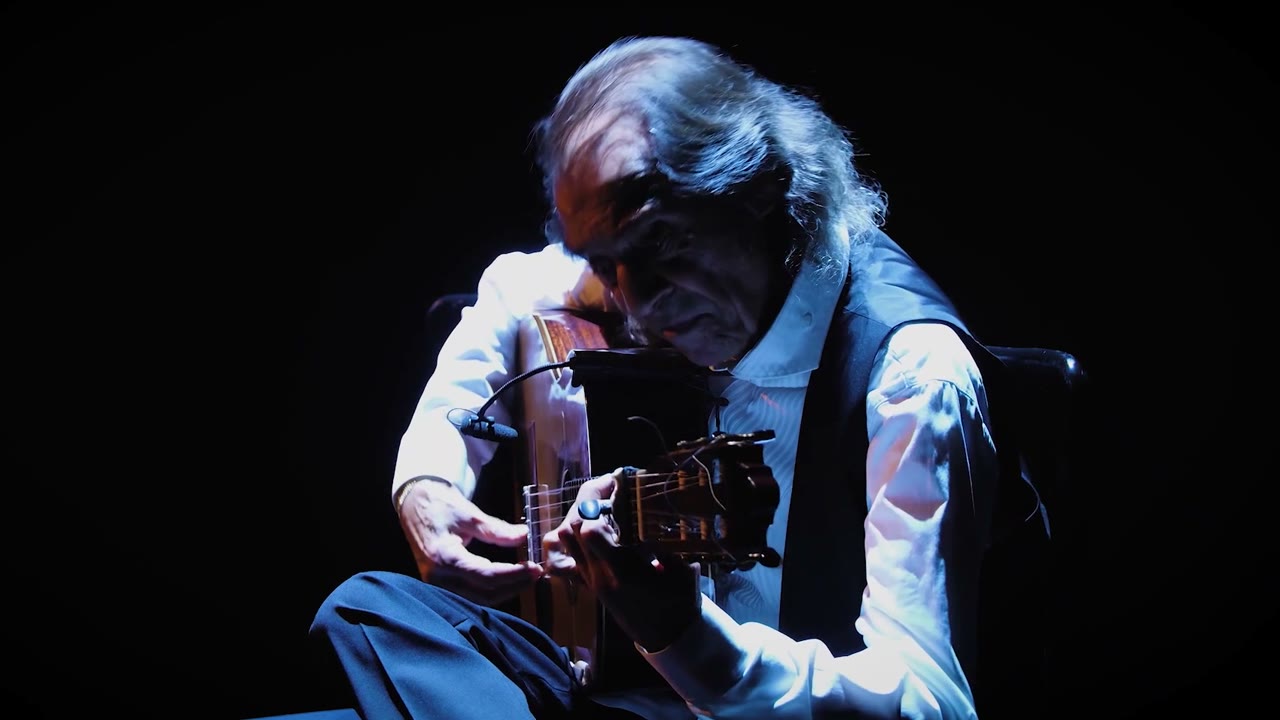
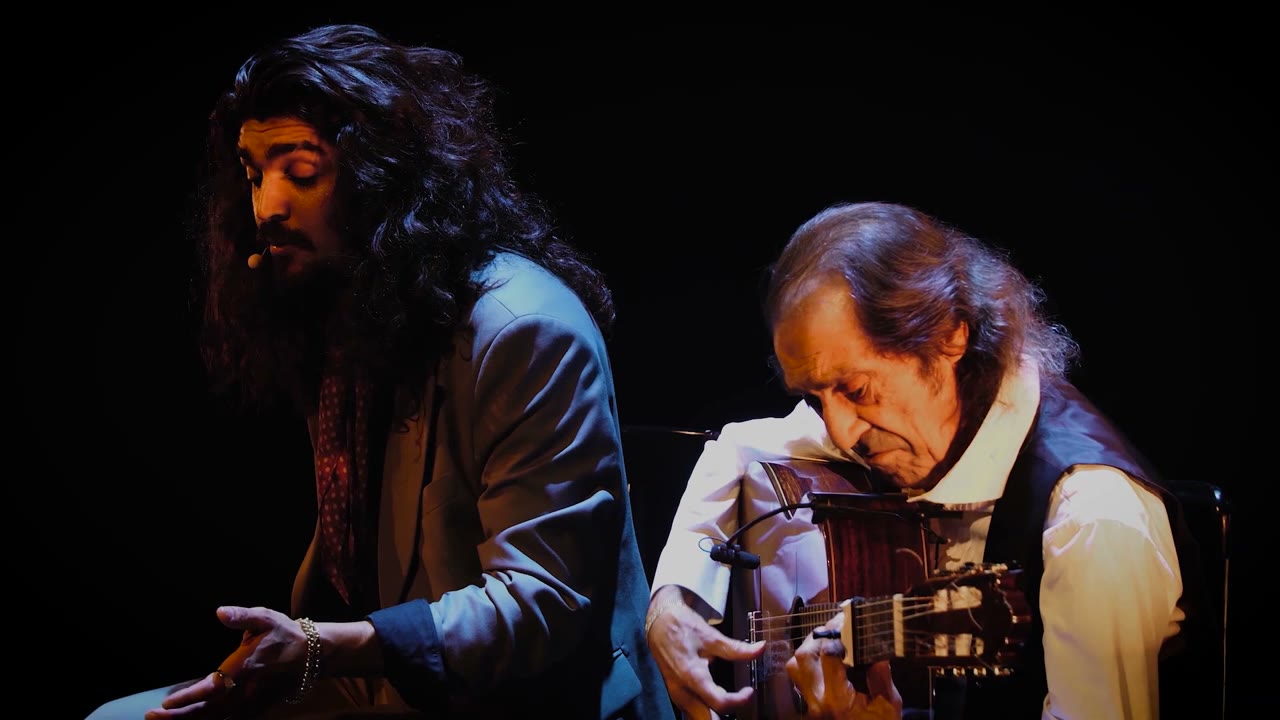
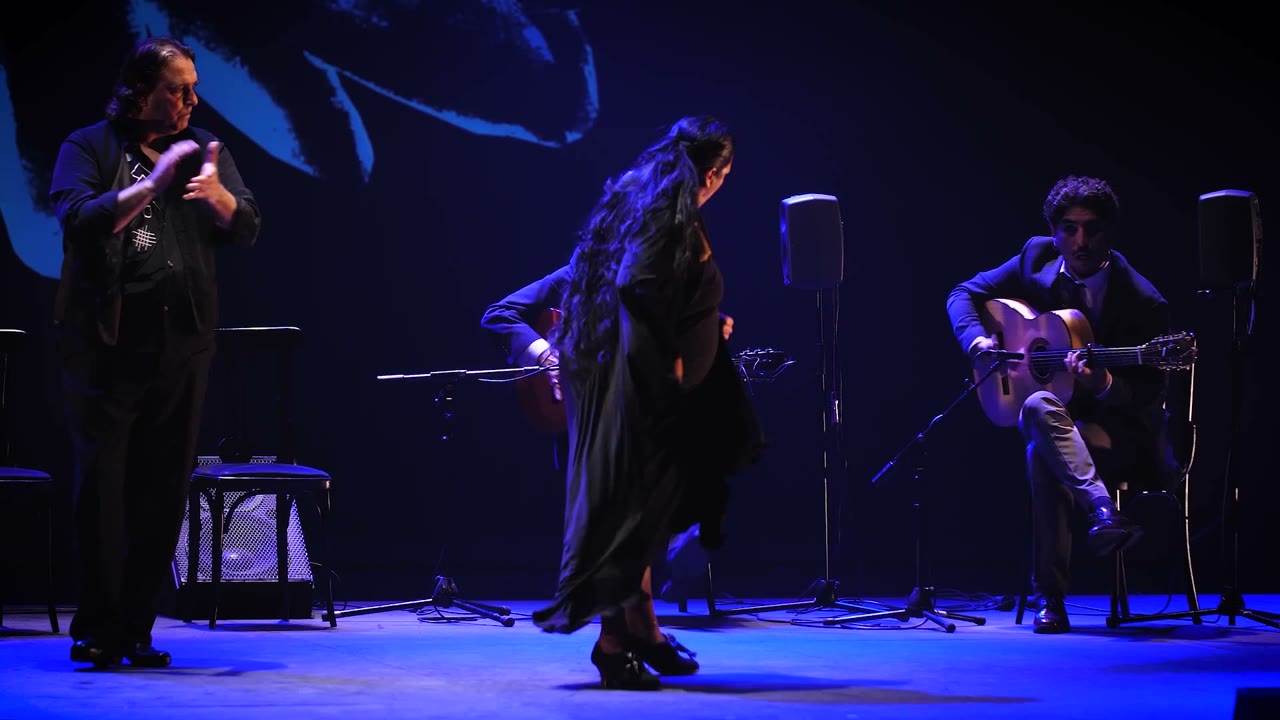
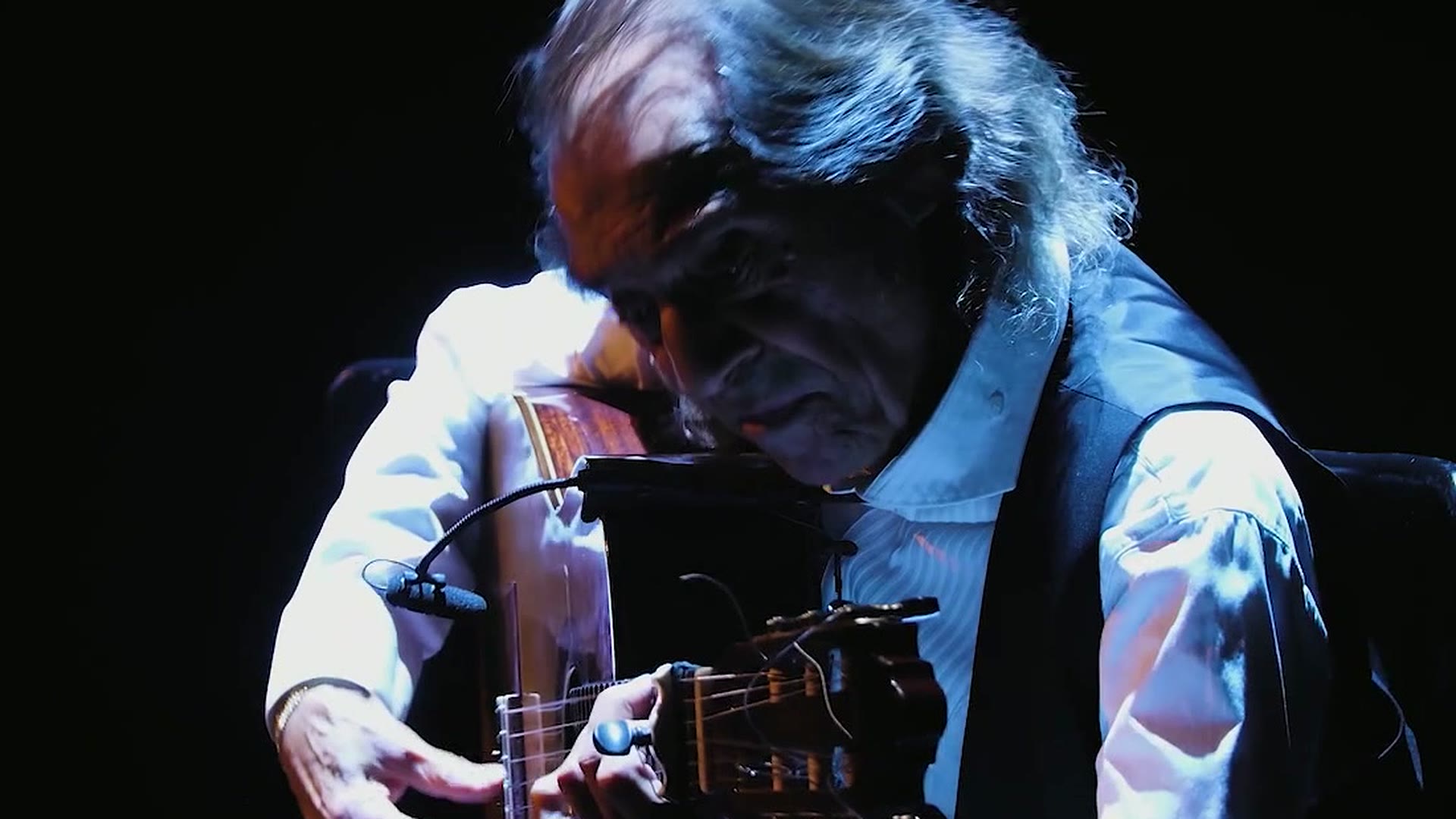
Our catalogue holds nine videos in which he appears, all of them original productions. Three come from the same night —Honores a la Cañeta de Málaga, Teatro Cervantes, 2022— and were among the last times he was filmed playing. We have opened up his solo taranta: four minutes and thirty-nine seconds of a seventy-eight-year-old man alone on an empty stage.
Watch this performance by Pepe Habichuela on our YouTube channel
Solo taranta on guitar. «Honores a la Cañeta de Málaga», Teatro Cervantes, 2022. An ALL FLAMENCO original production.