
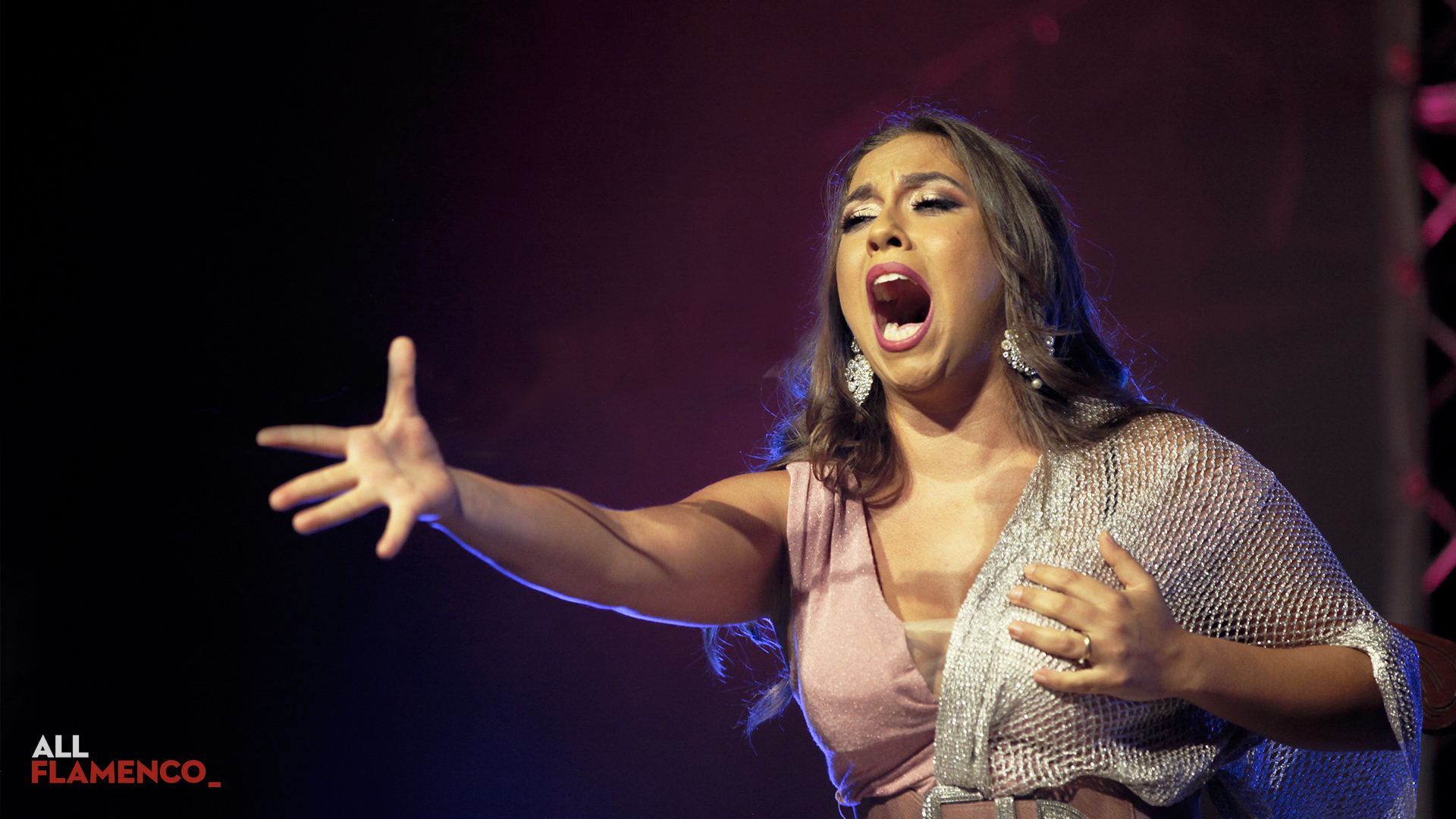
The night that really counts in the biography of María Terremoto is not the night of the prize or of the first album. It is an ordinary night in 2008 in a small hall in Jerez de la Frontera, the Asociación Cultural Fernando Terremoto, the peña —a flamenco members’ club— that carried her father’s name. She was eight years old and she was sitting in the audience, among her own people. Her father, Fernando Terremoto, called her up onto the stage and handed her a bulería. She took it and she sang it.
That night was, according to the biography the Bienal de Flamenco de Sevilla published years later, his final farewell to the stage. He was ill. He died on 13 February 2010, aged forty, of a brain glioma. His daughter was ten. Everything she has done since —the youngest Giraldillo in the history of the Bienal, two albums, an entire show devoted to her family— happens after that night and because of it.
A Surname That in Jerez Is an Address
María Fernández Benítez was born in Jerez de la Frontera on 21 December 1999, in the Santiago quarter, which is to Jerez what the Alameda is to Triana: not a neighbourhood with flamenco in it, but a place where singing is a way of being in the world. That is where she is from. And that is the first answer to give when someone asks where María Terremoto comes from, because in flamenco the place is not a line on a form: it is half the explanation of how a voice sounds.
Jerez has a way of saying things of its own. It is a cante of rajo —a rough, torn edge in the voice— short in tone and long in weight, closer to the beat than to display, with a way of finishing a bulería that cannot be learned anywhere except by being there. In her house, besides, it was not an influence: it was the family trade. Her paternal grandfather, Fernando Fernández Monge, «Terremoto de Jerez» (1934-1981), was one of the greatest cantaores of the twentieth century in the city and is still the reference for the seguiriya of Santiago. Her father, Fernando Fernández Pantoja (1969-2010), started out as a guitarist with Manuel Morao and did not make up his mind to sing until he was past twenty, because of the weight of the shadow he was carrying.
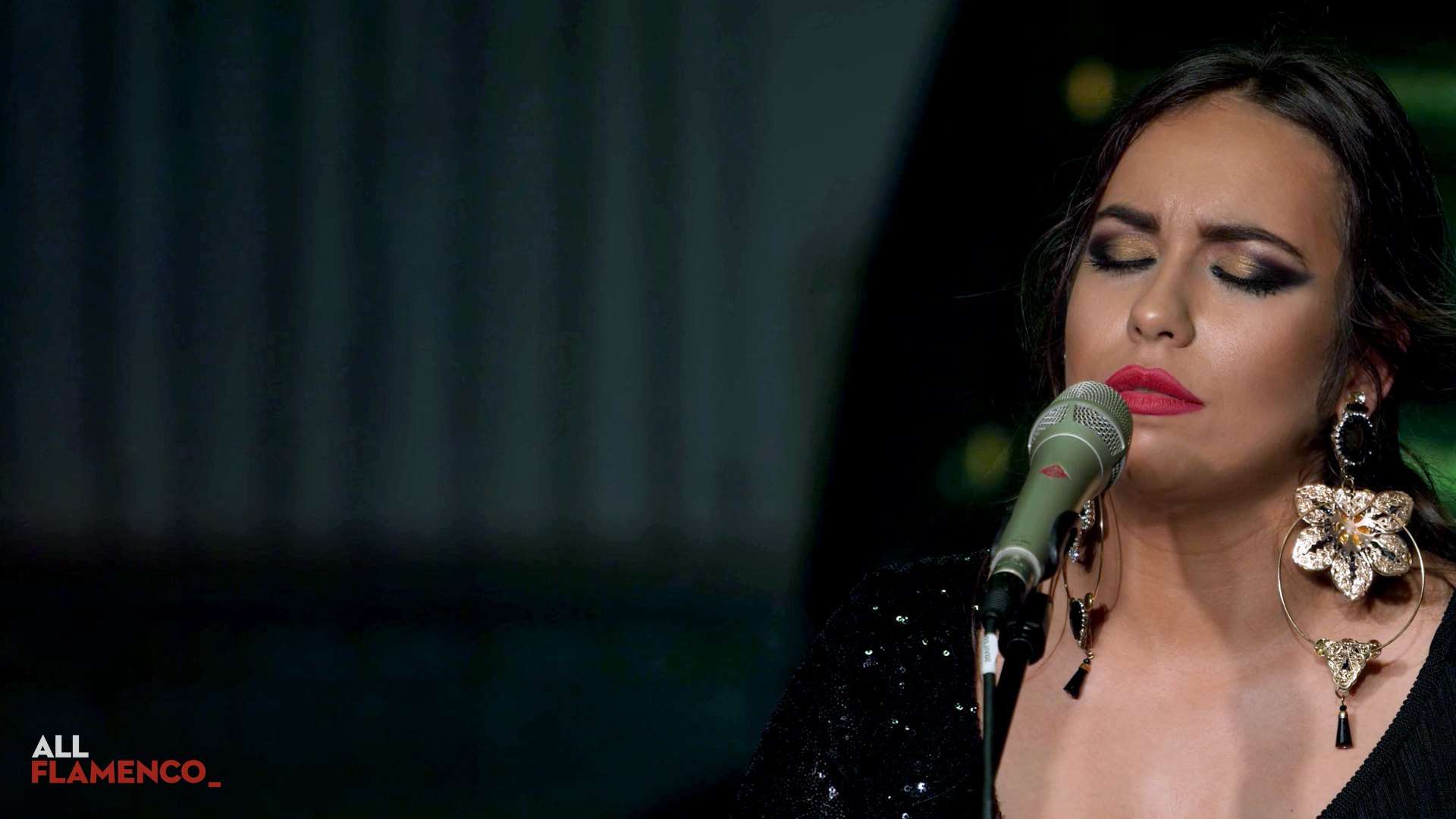
She never met her grandfather: he died eighteen years before she was born. She knows him the way anyone knows him, through the records, and through what is said at home. In her biography for Suma Flamenca she puts it like this: «As a boy my grandfather went through a great deal of sorrow, and he drew the rage up from the very bottom». Of her father she remembers something more domestic, and more revealing about the trade: «My father used to shut himself in the bedroom to compose, he recorded himself on a little machine and he would repeat it a thousand times».
Of that grandfather we hold «Terremoto. El documental» in the catalogue, the portrait of the man the nickname comes from.
BIO
Name and birth
María Fernández Benítez, «María Terremoto».
Jerez de la Frontera (Cádiz), 21 December 1999. Santiago quarter.
Flamenco family
Grandfather: Fernando Fernández Monge, «Terremoto de Jerez» (1934-1981), a master of the seguiriya.
Father: Fernando Fernández Pantoja, «Fernando Terremoto» (1969-2010), cantaor and guitarist.
Her father was nominated for a Goya award in 2004 for the song from Vicente Aranda’s Carmen.
Debut
Aged one, at a zambomba —a Jerez Christmas gathering— in a neighbours’ courtyard.
Aged eight, por bulerías, at the Asociación Cultural Fernando Terremoto. (The Bienal’s official biography places that day at the age of nine; the Universal press release and the festival biographies say eight.)
Awards
Giraldillo Revelación, XIX Bienal de Flamenco de Sevilla (2016): the youngest artist ever to receive it.
Venencia Flamenca (2017).
Cruzcampo award for best performance, Festival La Isla Ciudad Flamenca.
Premio Joven Ciudad de Jerez (2019) and Nuevos Creadores of the Secretariado Gitano (2019).
Albums
La huella de mi sentío (IRMusic, September 2018).
Manifiesto (Universal Music Spain, 31 January 2025).
Sixteen Years Old and the Youngest Giraldillo in the Bienal
The road was not a sudden discovery, although it looked like one. Around 2014, aged fourteen, she began to sing now and then in the peñas of Jerez. In 2015 the bailaor El Carpeta called her for his shows. And in 2016, at the Festival de Jerez, she gave a recital that the critics received with a unanimity that is not usual for an artist of that age.
That same year, at the XIX Bienal de Flamenco de Sevilla, she took the Giraldillo Revelación and became the youngest person ever to receive it. She was sixteen. What was singled out then —and it is still her defining trait— was not power, which Jerez has in abundance, but restraint: the ability not to decorate, to leave the cante bare and hold it there. It is the virtue of an old singer.
She herself has put an uncomfortable qualification on that start, in remarks collected by DeFlamenco: «If my father were alive he would not have wanted my launch as a cantaora to come so soon. He would have preferred me to study flamenco in depth before going up on stage». That is not false modesty: it is the awareness that a surname opens doors before their time.
«La huella de mi sentío»: a First Album at Eighteen
In September 2018 she released La huella de mi sentío. It is built on the cantes she heard as a child —traditional, jondo flamenco— with arrangements that look towards the sound of today, and the critics received it as the record that confirmed what the Bienal had rewarded two years earlier.
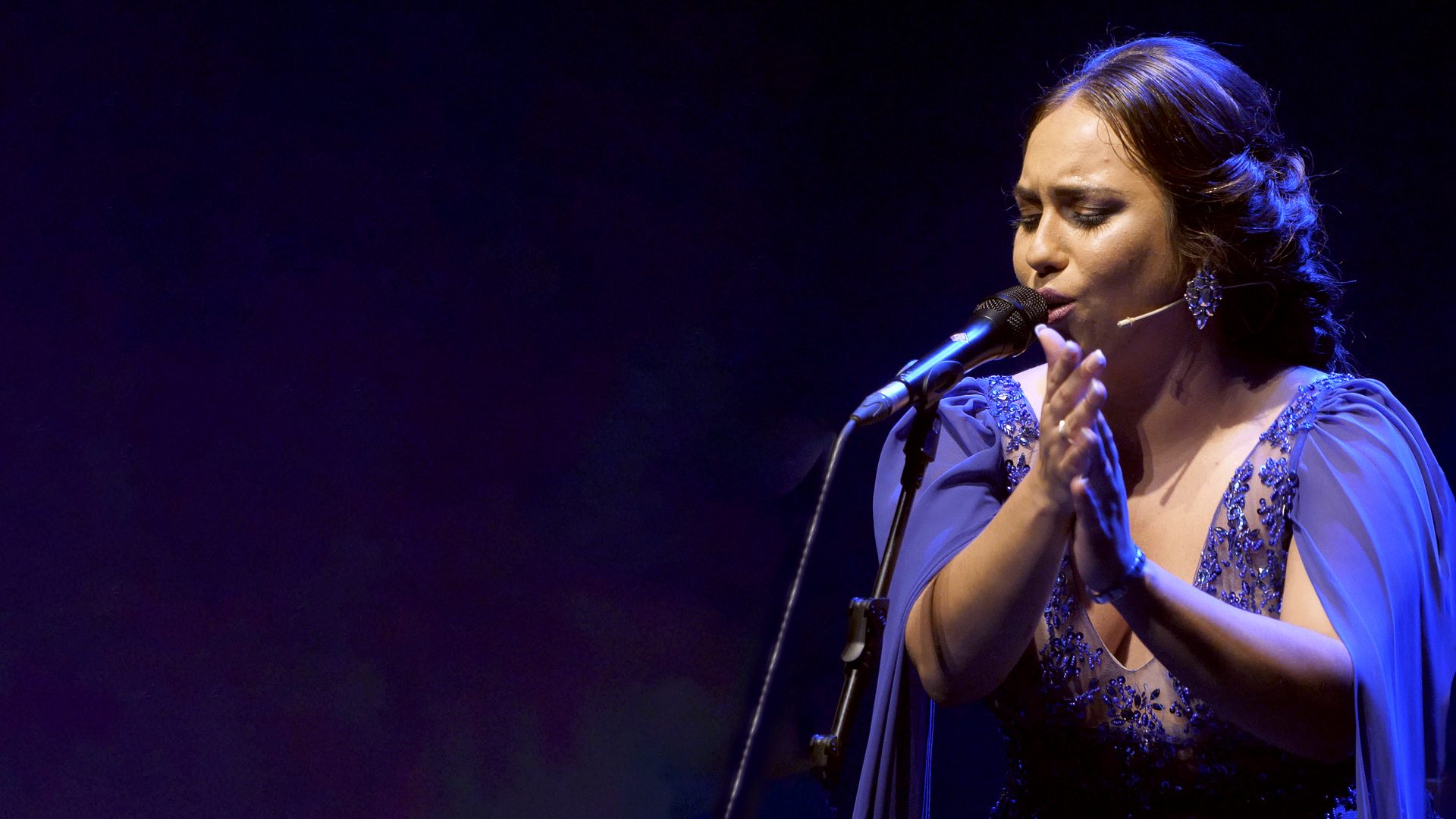
We have the launch at the Teatro Villamarta in Jerez recorded in full: seventy-eight minutes, with Ricardo Miño and Esperanza Fernández as guests. From that album came «Luz en los balcones», the song dedicated to her father. That video is one of the open ones: it can be watched without a subscription.
Then came the Cruzcampo award for best performance at the Festival La Isla Ciudad Flamenca, the Premio Joven Ciudad de Jerez 2019 and the Nuevos Creadores 2019 award from the Secretariado Gitano. That year she also directed her city’s Fiesta de la Bulería Joven, which in Jerez is a commission with a meaning attached.
What You Hear When She Sings
The question almost nobody asks, and the one that matters, is what exactly María Terremoto does with her voice. She commands the full jondo repertoire —soleá, seguiriya, bulería, fandangos, cantiñas, tientos, malagueñas, martinete— but every press release says that. What is different is how she administers it.
In the soleá she works in a middle register with long phrases, without theatrics, and saves the attack for the final tercio. In the seguiriya —her grandfather’s palo, and that is no coincidence— she lets the voice drop almost to speech before opening it out. In the martinete, which is sung with no guitar and no safety net, the Santiago school comes through with no filter at all. And in the bulería the other thing appears, what Jerez calls having gracia and what has no translation: the finish, the desplante, the beat that runs half a step ahead and comes back.
Her references, which she has named on RTVE, explain why her flamenco does not sound like a museum: «I like Aretha Franklin, Nina Simone, La Paquera de Jerez, Estrella Morente, and listening to a lot of music». Two cantaoras from Jerez and two soul voices, in the same sentence and with no hierarchy between them.
Manuela Carrasco, «My Third Grandmother»
There is a chapter of her training that has nothing to do with singing. During the years she lived in Seville she was close to the bailaora Manuela Carrasco, whom she calls her third grandmother. What came out of it was not a cantaora who dances but something more useful: a cantaora who understands dance from the inside and knows how to stand still on a stage. It shows in her gestures and in the way she measures silence.
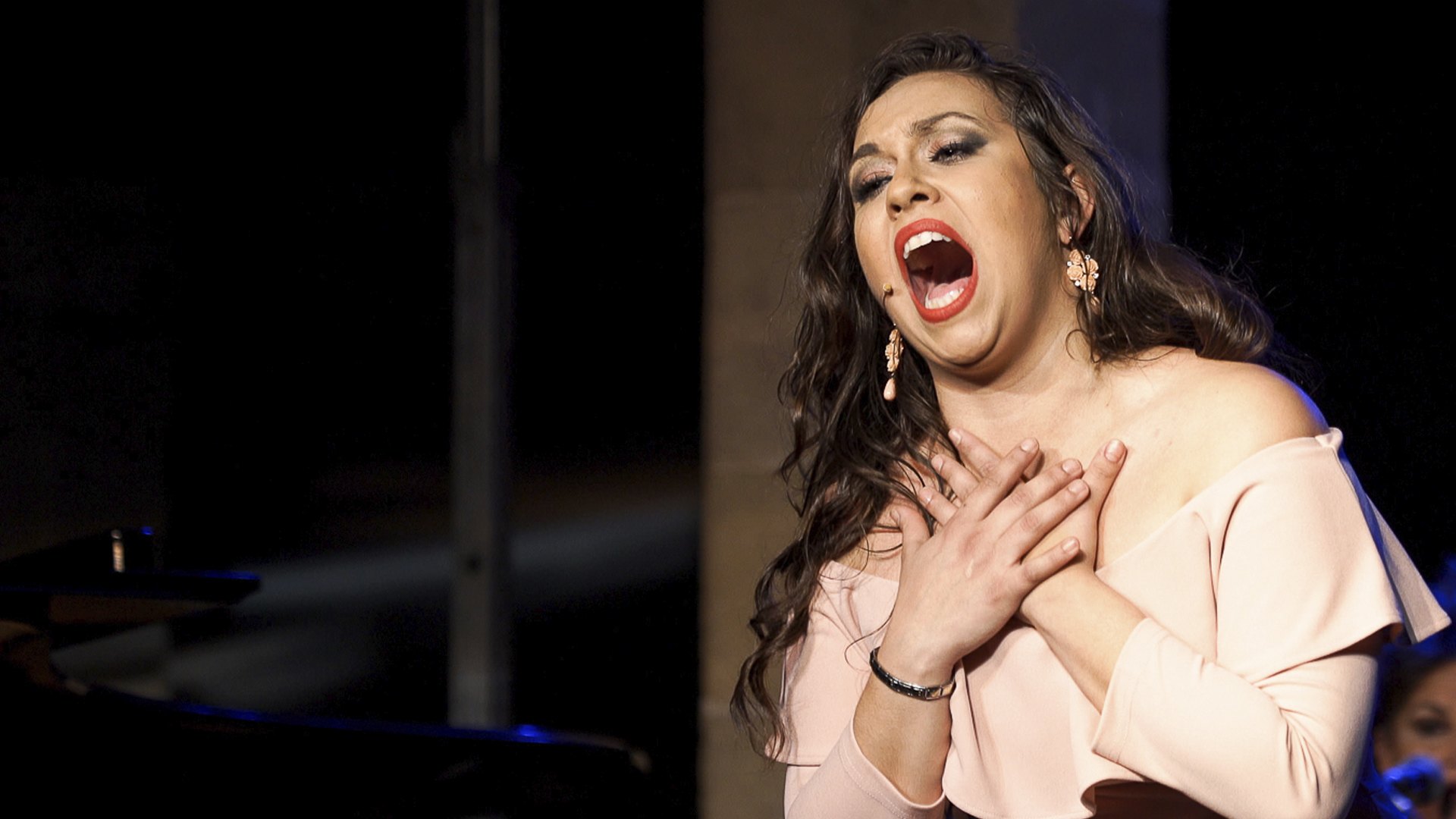
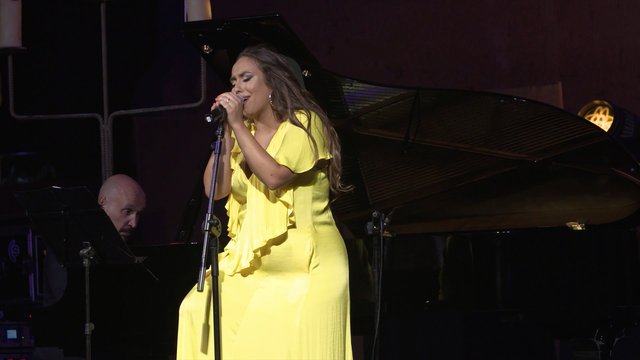
That apprenticeship is clearly visible in «Raíces», the concert she took to the 22 Festival de Jerez, where she explicitly claimed the inheritance of the gypsy cante of the Santiago quarter. And in «Canciones para una cantaora», recorded at the Coto de la Cantera in Osuna, where she carries a whole evening accompanied only by a piano: with no palmas and no guitar to hold on to, the cante is left out in the open.
2022: the Night She Sang for Her Own People
At the 26 Festival de Jerez she premiered «Terremoto, un siglo de cante», an entire show devoted to her family. We have it recorded complete, eighty-five minutes, and it is probably the best way in to what she does.
Three moments are worth the price on their own. «Mi casa cantaora», which she sings a capella, with nothing underneath, in a dress by the designer Pilar Rubio. «Se te fue la vida», the tribute to her father, with Diego Carrasco as a guest alongside her. And a seguiriya with the guitar of Nono Jero which is, of the whole show, the point where the surname weighs most. At the end comes «Cambalache», a tango from Buenos Aires that she pulls onto her own ground, in case anyone thought a family tribute had to be solemn from beginning to end.
2022 was also the year she left Spain in earnest: she passed through the Expo in Dubai, toured New York, Miami and Chicago and was nominated at the Odeón awards as flamenco breakthrough artist. The press had been calling her «the princess of cante jondo» for some time. The label served her while she was the young hope; from here on it began to look too small.
«Manifiesto» (2025): the First Time the Lyrics Are Hers
In July 2024 she signed with Universal Music Spain. On 31 January 2025 she released Manifiesto, her second album, six and a half years after the first: eight songs, a little over twenty minutes, recorded in six days at the Metropol studios in Madrid with the guitarist Yerai Cortés —the same one who has worked with C. Tangana— on guitar, palmas, percussion and production.
What matters is not the label or the producer: it is that for the first time she writes all the lyrics herself, apart from a few traditional fragments, and that she wrote them, by her own account, in about two weeks. The album is laid out as an emotional journey with a name for each stage —«Desconcierto», «Dudas», «Conciliación», «Devoción», «Resiliencia», «Libertad», «Coronación»— and opens with «A la muerte», a romance sung bare over a minimal cajón, about losing the people you love. Rockdelux‘s review picks out the detail that best defines the record: a petenera, «Alma no salgas del cuerpo», with two synthesiser notes underneath. Nothing else. MondoSonoro settled it as «one of the flamenco records of the year».
She presented it at the Teatro Villamarta in Jerez on 1 February 2025, after a preview in Nîmes two weeks earlier, and then toured Marbella, Barcelona, Málaga, Granada, Seville, Burgos and Cádiz, with a stop at the Universal Music Festival in Madrid’s Teatro Albéniz.
Why She Sings Like That
It comes down to three things, and none of them is talent, which is taken for granted. The school: Santiago, Jerez, a cante learned by ear in people’s houses and not in a conservatory. The grief: a father who said goodbye to the stage by handing a bulería to an eight-year-old girl and died two years later, and a body of work that has spent twenty years coming back to that without ever turning sentimental. And the restraint, which is the decision not to shout when shouting is available.
At twenty-six she is no longer a promise of the young cante, which is how she was introduced for the best part of a decade. She is a finished cantaora who, holding the heaviest surname in Jerez, has chosen the hard road: to sing like her own people without imitating them.
Where to Watch María Terremoto Sing in Full
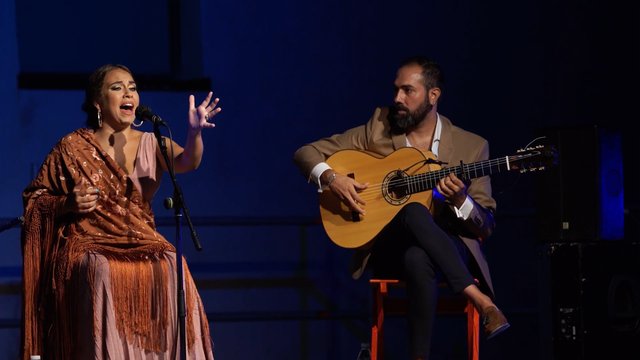
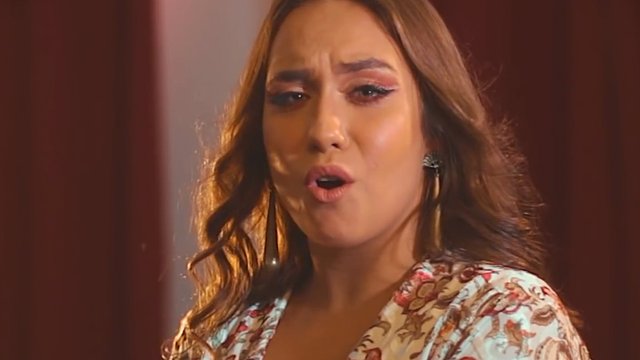
The ALL FLAMENCO catalogue holds fifty-five titles she appears in, filmed in 4K in theatres and festivals, from complete recitals to single cantes. These eight are the place to start; the last two are open and can be watched without a subscription.
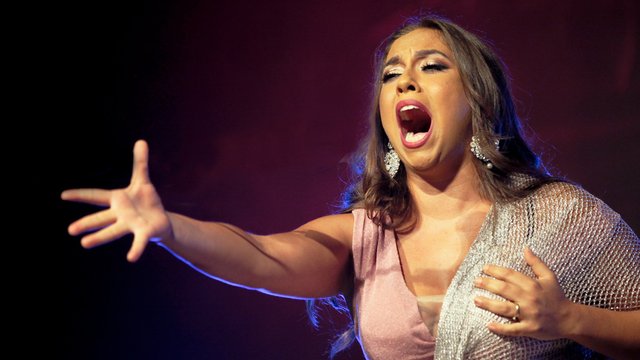
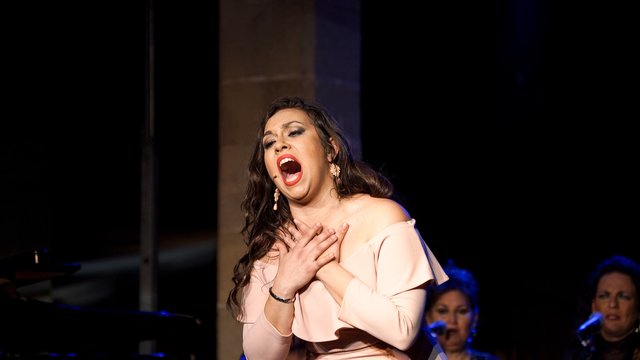
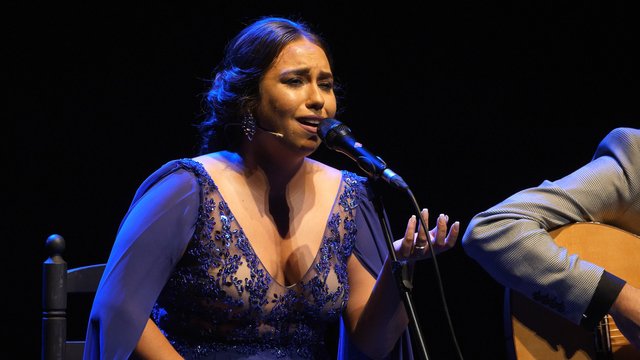
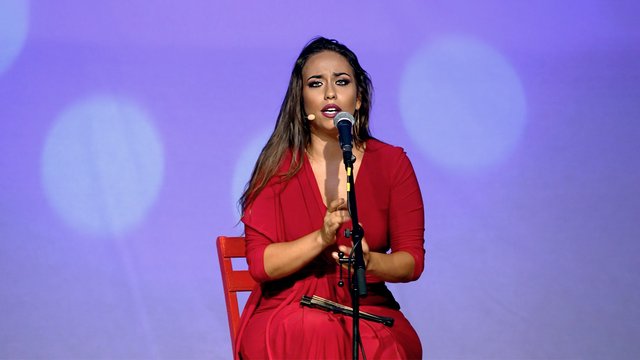
She also appears, alongside other voices of today’s cante, in «Lo mejor del cante en La Isla Ciudad Flamenca» and in the Noche Flamenca del Parque devoted to women’s voices. The full list is on her artist page.