
In the forge at Mairena del Alcor where Rafael Cruz worked the iron, his eldest son hammered and listened. Manuel Torre and Joaquín el de la Paula, friends of his father, came through the house, and the boy heard them sing without anyone setting out to teach him anything. They were his teachers by accident.
Fifty years later, whatever that boy said was the old way of singing por seguiriyas would be, for the festivals, the juries and the great mass of listeners, the old way of singing por seguiriyas. That is the story of Antonio Mairena: a man who went looking for a cante that was disappearing and ended up deciding what it was.
A Boy in the Forge, and a Childhood He Never Had
Antonio Cruz García was born in Mairena del Alcor (Seville) on 7 September 1909, at midday, in the square that now bears his name. (The register records the 5th, and nobody — not even he — ever knew why. That is why sources disagree between the two dates.) He was the eldest of a gypsy family that had come from Utrera looking for something better. His father was a blacksmith and a keen aficionado; his mother, Aurora García Heredia, danced, above all por tangos, as he remembered in later life.
The forge was his second home and it took most of his childhood: as the eldest, that was custom as much as necessity. But what hurt him all his life was something else — not having been able to study. In his memoirs he wrote that he went to school for three years, and only in fits and starts. He spent the rest of his life making up for it: self-taught first, then a fiercely diligent student of night classes as soon as he could pay for them.
A Child Who Breaks into Song from His Mother’s Lap
He himself placed the moment his fate was decided around 1920. The dancer Faíco was performing at a party. Antonio, sitting on his mother’s lap, felt the urge to break into a tango — one of Pastora Imperio‘s — and did. Faíco was delighted, and the surprise extended to the boy’s own parents. From then on he wanted to do nothing else.
Lack of money kept him out of the 1922 Cante Jondo Competition in Granada, the one Falla and Lorca organised and El Tenazas won; for his father, at twelve he was too young anyway. In 1923 he stepped onto a tablao for the first time, in Carmona, at a place called Casa del Moro. And in 1924, at the Alcalá de Guadaíra fair, he took first prize por seguiriya and por soleá: twenty duros handed over gladly by Joaquín el de la Paula, who was on the jury and called him «el Niño de Rafael». The nickname «el de Mairena» came from Manuel Torre.
The Years of Drifting
He began singing for friends, moved on to taverns and roadside inns, and at one point ran a bar in Carmona. His mother’s death in 1928 broke him; he took two of his sisters and his maternal grandmother, to whom he was very close, to live with him.
That same 1928 marks his first steps as a researcher, through a relative, Diego el de Brenes, with the jondo of El Nitri as his subject. That beginning fed on his contacts with gypsy artists who, like him, went from venue to venue and from ópera flamenca to ópera flamenca. He also passed through more prestigious rooms — Seville’s Kursaal Internacional, accompanied by Javier Molina — and never took hold in any of them. Audiences wanted fandangos, not seguiriyas.
One scene from those years shows him whole. In 1930, at a competition he had himself organised for a brotherhood in Mairena, Manuel Torre sang. Antonio was due on next. He came out and said: «Ladies and gentlemen: after what Manuel Torre has just done it is impossible to sing again… The show is over.»
The Holy Week That Changed His Name
In Holy Week 1933 he was asked to stand in for El Gloria at the Tertulia Sevillana, run by the bullfighters Juan Belmonte and Rafael el Gallo. Being Holy Week, he sang por saetas. He sang them beautifully. He was carried out shoulder-high, and the story goes that even the bearers of the Cristo de los Gitanos stopped to listen — which earned them a hefty fine. That night he stopped being «el Niño de Rafael» and became Antonio Mairena.
Shortly afterwards Carmen Amaya heard him at a party and invited him into María de la O, the film she was shooting. More plans came of it, and the Spanish Civil War cut them short: Carmen went into exile in the United States and Antonio, a known republican sympathiser, stayed behind to support his family. They met again later, and on her death in 1963 he was categorical: «She was the greatest genius flamenco dance has produced.»
Singing What He Did Not Want to Sing
While the great names of the moment — Manolo Caracol, Valderrama, the Niña de los Peines — were succeeding with a more commercial repertoire, he went on, as he wrote, «drifting». And he had to give ground: his first four shellac recordings, in the early forties, were made on the «advice» of the label (La Voz de su Amo), leaving out the jondo cantes he had brought with him. The experience kept him out of the studio for a while, until Columbia offered to let him record his own way.
The fifties were the boom years of the tablaos, and he went from stage to stage: the Villa Rosa, the Samba cabaret. In 1949, Carmen Amaya, by then back in Spain, hired him for her company at the Teatro Fuencarral. Around 1950 he toured Europe and Africa with the Teresa and Luisillo company.
The turning point came with Antonio el Bailarín, whom he met through Valderrama. He accompanied him around the world for ten years — and this after saying out loud that he was uncomfortable with cante being subordinated to dance. Appearing on the bill of the most famous flamenco dancer on the planet is what made his name.
1962: the Third Golden Key in History
The Golden Key of Cante is the highest distinction a cantaor can receive and it has been given a handful of times in a century and a half. Before him only Tomás el Nitri and Manuel Vallejo had held it. When Vallejo died in 1960, Córdoba’s National Flamenco Art Competition called an extraordinary contest to award the third, with a prize of one hundred thousand pesetas. Fosforito, El Chocolate, Juan Varea, Pericón de Cádiz and Platero de Alcalá competed.
Mairena won. He was fifty-two and had been singing for forty years, and the key was handed to him at the Alcázar de los Reyes Cristianos, closing a circle, by Antonio el Bailarín: the same man he had toured the world with for a decade. (The year and the place are firm; the exact days of the contest do not agree between sources, which give 29-30 May, 19-20 May, and the presentation on the 21st.)
It was not a lifetime award. It was the recognition of an authority. From that day on, whatever Mairena said was the old cante became, with no further argument, the old cante.
What Mairenismo Is
A year later, in 1963, he published Mundo y formas del cante flamenco with the poet Ricardo Molina, the book that arranged flamenco into a genealogy: gypsy cantes on one side, Andalusian cantes on the other, and a transmission from household to household that had supposedly preserved the purest forms far from any stage. In 1966 he took it to record with La gran historia del cante gitano andaluz, an anthology in which he recorded styles almost nobody sang any more.
That is mairenismo: the idea that there is a core gypsy-Andalusian cante, with fixed forms and a correct way of performing them. For two decades it was the dominant criterion in festivals, competitions and juries. His complete work and his recordings are now on his official website and in the monograph the Andalusian Flamenco Institute devoted to him.
And Why It Is Disputed
It is also the most disputed part of his legacy, and the criticism is serious. Since the seventies, flamencological revisionism has accused him of building a genealogy that is more ideological than historical, of treating oral tradition as documented fact, and of narrowing flamenco at the very moment he meant to save it.
The suspicion reaches the award itself: it has been written that the 1962 contest was decided in advance and arranged by Ricardo Molina — the same man he would co-sign the book with the following year — leaving out figures such as the Niña de los Peines and Manolo Caracol. It is worth saying plainly: this is a charge made by part of the critical establishment, not a proven fact.
But the two things should not be confused. That his theory is arguable takes nothing away from the rest: when Mairena started searching, there were styles sung by only three or four elderly people in their own homes. They are sung today because he recorded them. The theory is disputed; the recordings are there.
BIO
Name and birth
Antonio Cruz García, «Antonio Mairena».
Mairena del Alcor (Seville), 7 September 1909. In the register, the 5th.
The nickname came from Manuel Torre; before that he was «el Niño de Rafael».
Family
Parents: Rafael Cruz Vargas, blacksmith and aficionado, and Aurora García Heredia, a dancer por tangos.
He was the eldest of the siblings. Among them, the cantaores Curro Mairena, Manuel Mairena and Juan Mairena.
Milestones
1923: first tablao, the Casa del Moro in Carmona.
1924: first prize at the Alcalá de Guadaíra fair, por seguiriya and soleá.
1933: the saetas at the Tertulia Sevillana. He becomes Antonio Mairena.
1962: Golden Key of Cante, the third in history.
1963: Mundo y formas del cante flamenco, with Ricardo Molina.
1966: La gran historia del cante gitano andaluz.
Death
Seville, 5 September 1983, of a heart attack. Two days before his seventy-fourth birthday.
What Remains
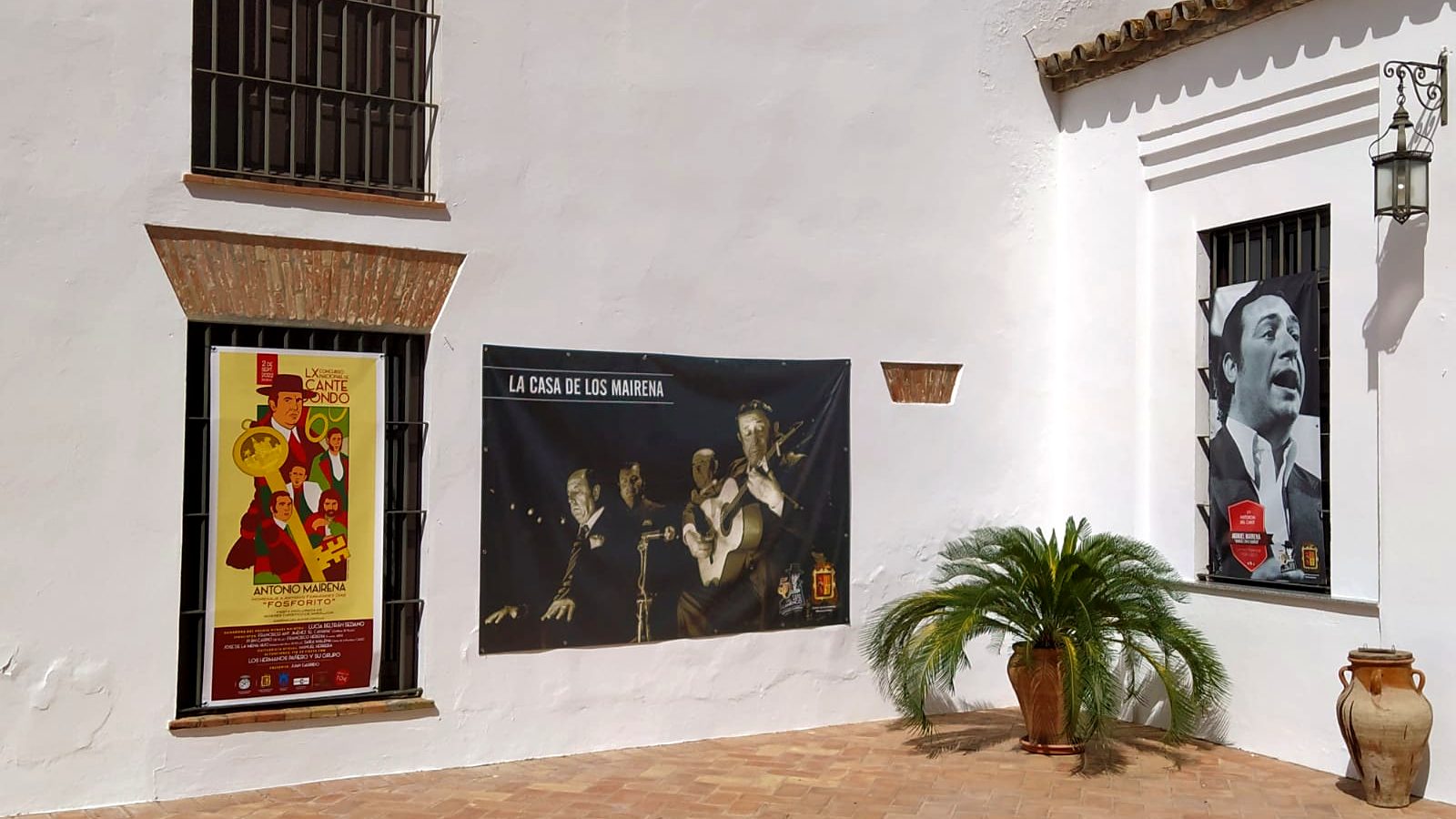
He went on singing, recording and writing to the end. He died in Seville on 5 September 1983, of a heart attack, two days short of seventy-four. The cante festival that bears his name is still held every summer in Mairena del Alcor, and his house is now a museum: the Key, the hat and the scarf are there.
Forty years on, almost anyone singing por seguiriyas or por soleá is singing, knowingly or not, some version of what Antonio Mairena decided the way to sing it was. You can argue about whether he was right. What you can no longer do is sing as if he had never existed.
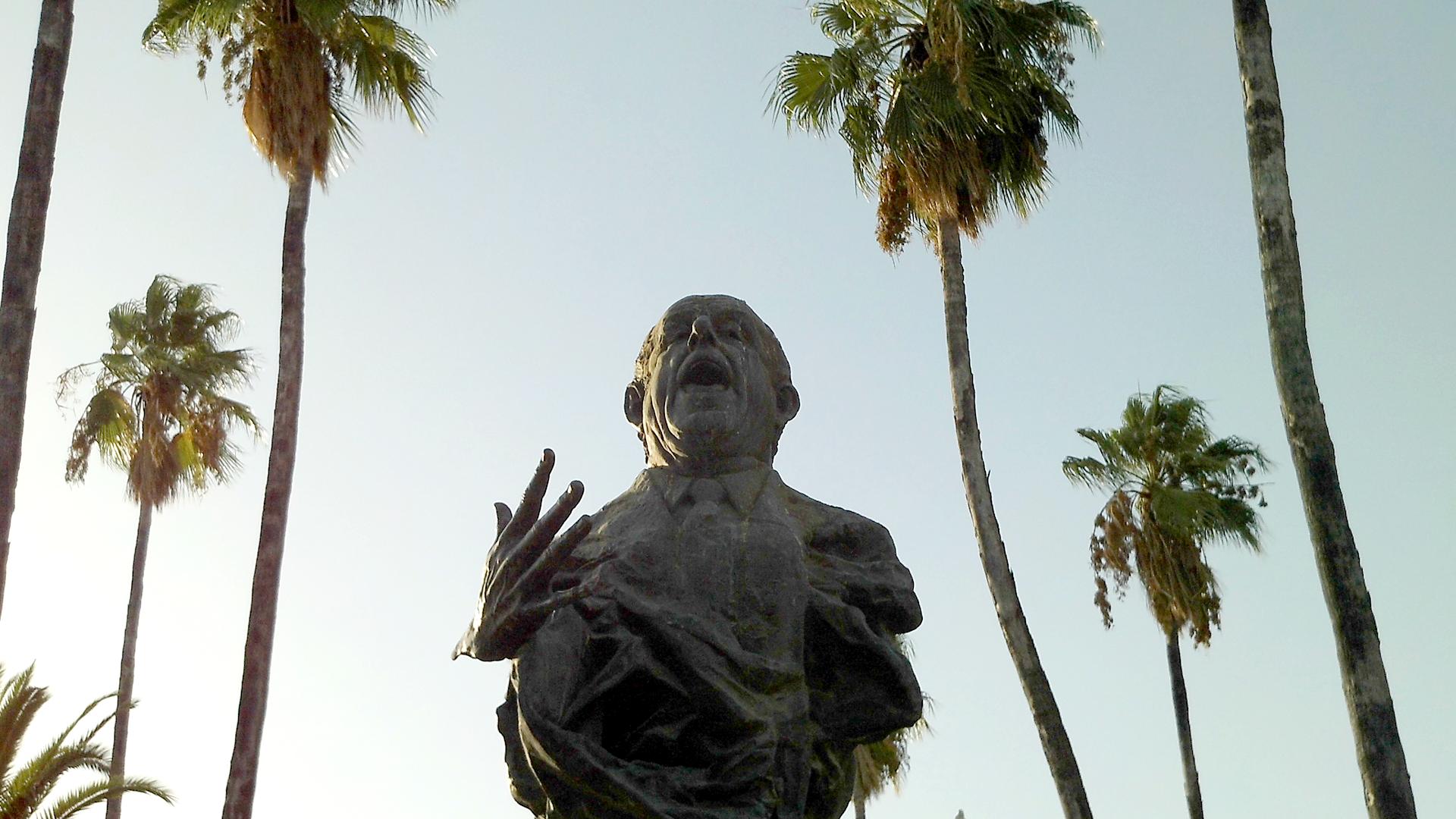
Header image: monument to Antonio Mairena, by Augusto Morilla (1990). Photo: CarlosVdeHabsburgo · CC BY-SA 4.0