
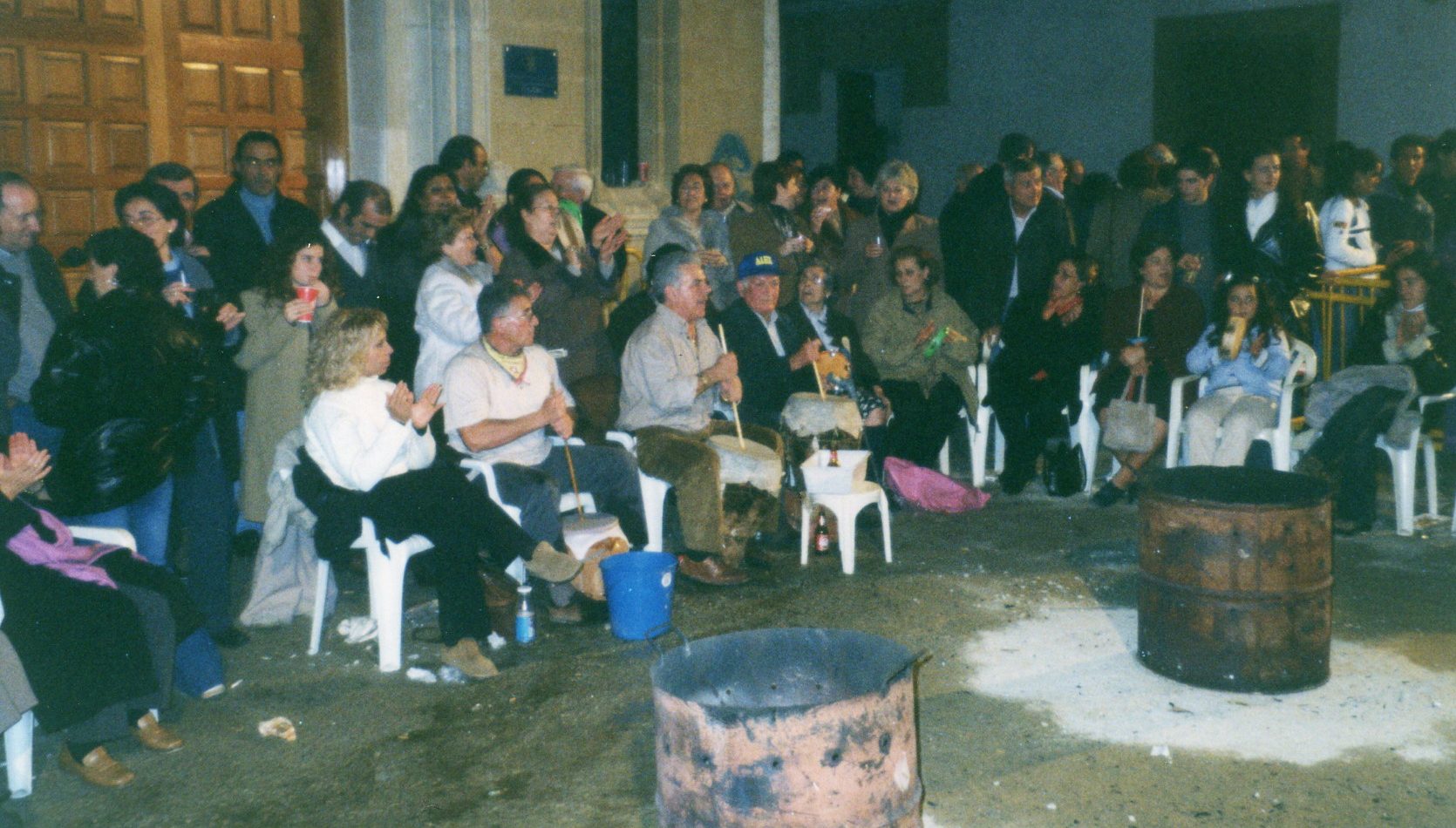
Flamenco zambombas are much more than a Christmas festivity: they are the shared soul of Andalusia during the month of December. In cities like Jerez de la Frontera, Arcos, Cádiz, or Seville, these popular celebrations return each year with strength and emotion, as a living testimony of flamenco in its most communal, festive, and traditional form. This ancient custom, recognized as an asset of cultural interest, blends music, community, and the Christmas spirit in an unforgettable experience for locals and visitors alike.
What is a Zambomba: Origin and Meaning
The word “zambomba” refers both to a traditional musical instrument—made from a clay or wooden container, covered with a stretched membrane pierced by a stick that is rubbed to produce a deep, rhythmic sound—and to a unique form of popular celebration. In Andalusia, to say you’re “going to a zambomba” doesn’t mean attending a concert, but rather joining a gathering of neighbors, friends, and family where singing, laughter, hand clapping, wine, and rhythm fill the air.
Its origin dates back to the 18th century, when residents of neighborhoods and patios came together during Advent to sing popular carols accompanied by homemade instruments. Over time, these spontaneous meetings took on a more structured form, and the Christmas songbook began to incorporate melodies, rhythms, and stylistic elements of flamenco. Thus was born the flamenco zambomba as we know it today.
A Celebration for All the Senses
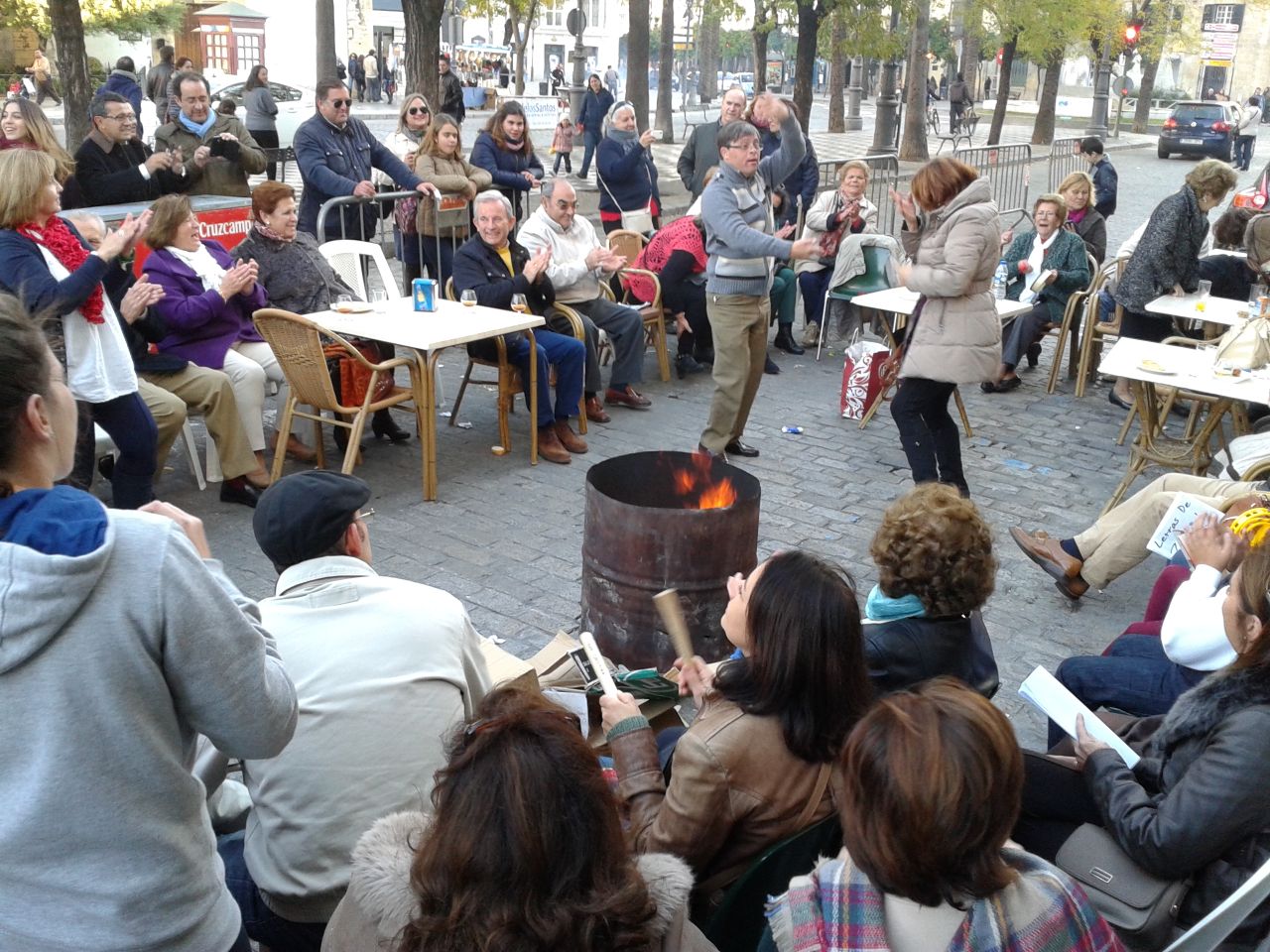
What sets a flamenco zambomba apart from other Christmas festivities is its choral, participatory, and deeply emotional nature. In its most traditional form, there is no stage or hired artists: anyone can pick up a guitar, sing a carol, or keep rhythm with clapping. The lyrics tell Christmas stories from a daily-life perspective, mixing humor, tenderness, and devotion with the rhythms of bulerías, tangos, or fandangos.
Music intertwines with the aromas of sweet wine, anise liqueur, and traditional pastries like pestiños, roscos, or buñuelos. Bonfires light up the patios as the revelry spreads through streets, taverns, and squares. Each zambomba is different, but all share the same essence: the celebration of life, community, and art.
Jerez: The Cradle and Heart of the Flamenco Zambomba
Jerez de la Frontera is the epicenter of this tradition. There, zambombas are lived with a unique intensity and authenticity, forming a fundamental part of the city’s collective memory. From late November to Christmas Eve, hundreds of zambombas are held each year in flamenco clubs, wineries, private homes, and public spaces.
The Jerez zambomba has been recognized as a representative manifestation of Andalusian intangible cultural heritage. This designation highlights not only its musical and social richness but also its role in oral transmission, neighborhood cohesion, and flamenco cultural identity. Many families preserve their own repertoires, passed down through generations, while new compositions are added each year to keep the flame of Christmas singing alive.
Zambombas Today: Between Tradition and Global Reach
In recent years, zambombas have gone beyond local borders and become a top cultural attraction. Their charm lies precisely in their authenticity: these are not staged performances for visitors, but real celebrations where everyone is welcome to join in, share, and be moved.
This openness, however, also presents challenges: how to maintain spontaneity and a grassroots spirit without falling into over-commercialization? Many flamenco clubs and cultural groups are working to preserve the essence of the zambomba, preventing it from becoming just another entertainment product. At the same time, platforms like ALL FLAMENCO play a vital role in responsibly spreading these traditions, bringing them to wider audiences without diluting their roots.
The Zambomba as a Complete Flamenco Experience
For flamenco enthusiasts, zambombas offer a privileged view of the art form in its purest and most collective state. There are no choreographies or big productions—just shared singing, laughter, rhythm, and human warmth. It is flamenco lived, felt, and passed on from the heart.
And for those discovering flamenco for the first time, a zambomba can be the perfect gateway: an open celebration where the emotion is immediate, contagious, and free of barriers or solemnity. It is, ultimately, an entryway into Andalusian culture, the Christmas spirit, and the beauty of flamenco in its most intimate and heartfelt version.
ALL FLAMENCO, as a platform dedicated to the dissemination of flamenco in all its forms, offers a carefully curated selection of content each December focusing on zambombas: recitals, documentaries, gatherings, interviews, and memories that capture the essence of this unique celebration. Through its platforms, you can relive the magic of a zambomba from anywhere in the world, with all the emotion of a night in Jerez.
Frequently Asked Questions (FAQ)
What is a flamenco zambomba? A flamenco zambomba is a traditional Andalusian Christmas celebration, especially prominent in Jerez, where people gather to sing and play flamenco-style carols in a communal setting. There’s no distinction between performers and audience—anyone can join in. Traditional instruments like the zambomba, guitar, and hand clapping accompany the music. It’s one of the most authentic and spontaneous expressions of flamenco.
Where are the most important zambombas held? The most iconic zambombas are held in Jerez de la Frontera from late November through Christmas. They are also common in Arcos de la Frontera, Cádiz, Seville, and other Andalusian towns. You’ll find both open-air public celebrations and organized gatherings in flamenco clubs and cultural spaces.
What is the difference between a zambomba and a flamenco show? A zambomba is not a formal show. Unlike flamenco performances with a clear stage and audience, zambombas are participatory events. Anyone can sing, clap, or play. They’re festive and spontaneous, though in recent years some have become more structured for larger audiences.
How can I experience a zambomba if I’m not in Andalusia? ALL FLAMENCO offers a special December selection dedicated to flamenco zambombas. You can watch recitals, documentaries, and exclusive content from anywhere in the world through its platforms, and experience the magic and emotion of this unique tradition from home.