
Flamenco is felt in the soul—but it can also be savored. The fusion of flamenco art and local gastronomy has become an essential experience for anyone wanting to discover Spain through its most profound passions. This article offers a curated route through tablaos, restaurants, and cultural spaces where music, dance, and fine cuisine come together.
From Granada to Madrid, San Fernando, Barcelona, Cádiz, Torremolinos, Málaga, and Seville—each venue blends flamenco tradition with regional flavors, offering unforgettable sensory experiences.
Essential Tablaos Where Flamenco and Fine Dining Meet
Tablao Albaizyn (Granada)
Located in the historic Albaicín neighborhood—a UNESCO World Heritage Site—this tablao boasts stunning views of the Alhambra and a commitment to traditional flamenco from Granada. Founded in the late 20th century, it has hosted local artists like La Moneta, Antonio Campos, and Juan Ángel Tirado. Its intimate setting features rustic beams, stone walls, and close proximity to performers. The menu includes rabo de toro (oxtail stew), salmorejo, artisanal tapas, and local Granada wines.
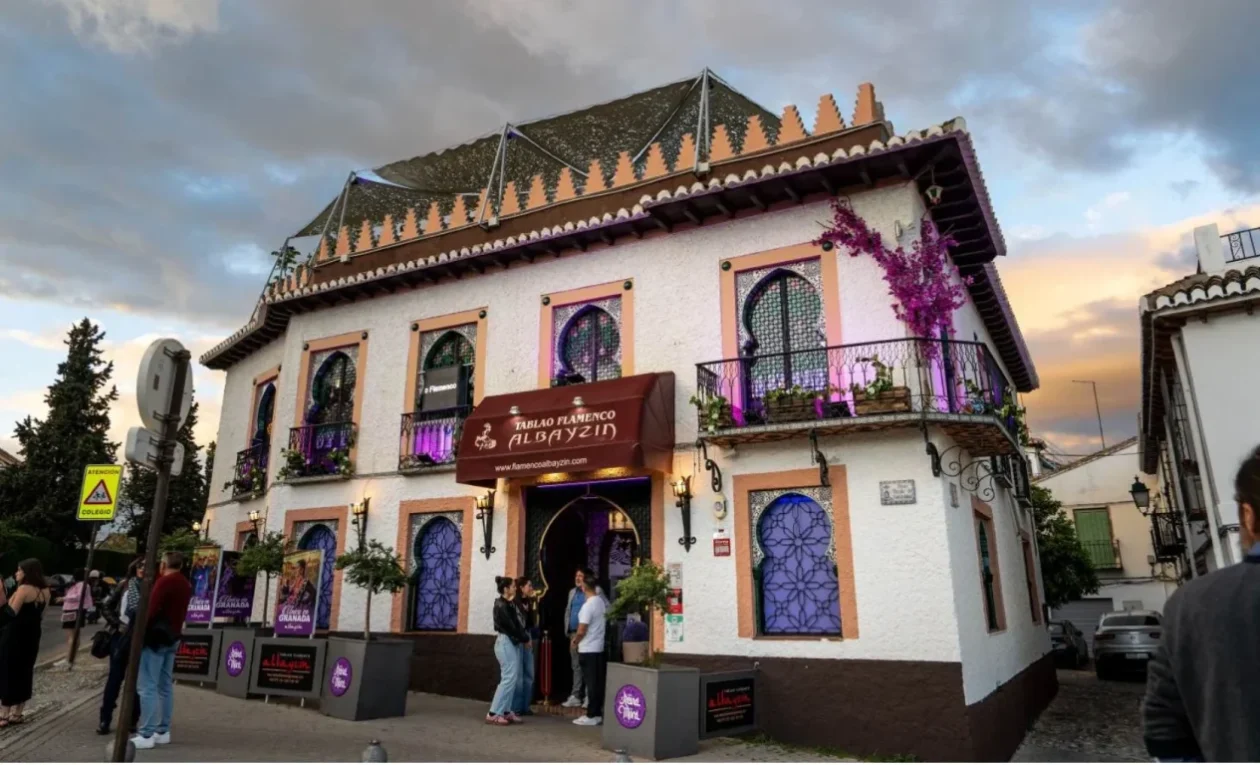
Uno de los tablaos mas bonitos de Granada
Venta de Vargas (San Fernando, Cádiz)
Founded in 1924, this legendary venue saw the debut of Camarón de la Isla and remains a flamenco sanctuary. Greats like Rancapino, Juan Villar, and Jesús Méndez have graced its stage. With a traditional interior of tiles, wood, and historic photos, the space regularly hosts live shows for locals and visitors alike. Its kitchen pays tribute to the Bay of Cádiz, featuring fried fish, seafood stews, chicharrones, and homemade desserts.
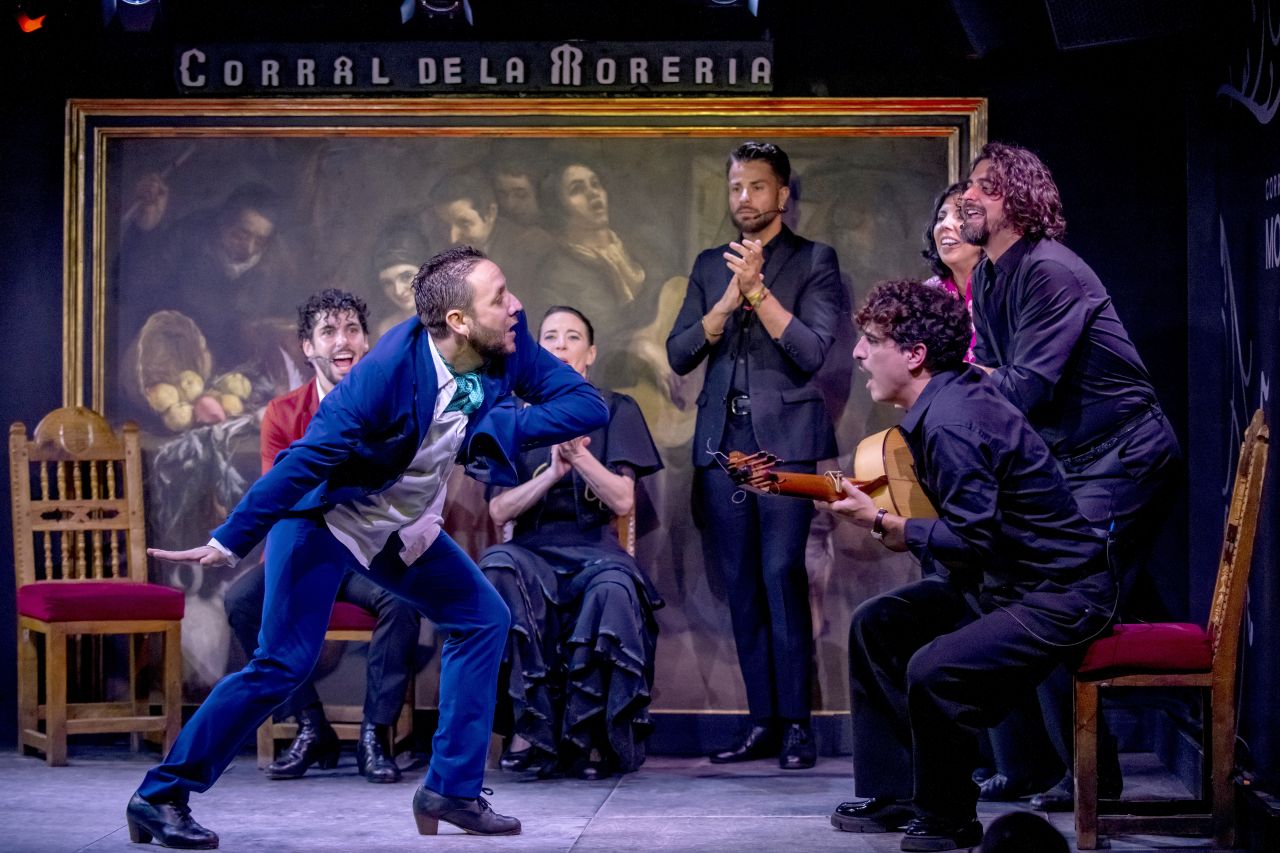
Corral de la Morería (Madrid)
Opened in 1956, this is widely considered the world’s most prestigious tablao. Legendary figures like Antonio Gades, La Chunga, Farruquito, Belén López, and Olga Pericet have performed here. Declared a Cultural Heritage Site by the city of Madrid, it merges high-level flamenco with gourmet cuisine. The Michelin-starred restaurant, led by chef David García, offers tasting menus paired with top-tier performances in a classic, evocative setting.
Tablao Villa Rosa (Madrid)
Situated in Madrid’s Plaza de Santa Ana and founded in 1911, this tablao is known for its neo-Mudejar architecture and hand-painted ceramic tiles. Icons like Fosforito, La Paquera de Jerez, Antonio Canales, and El Yiyo have taken the stage. The kitchen serves up hearty Madrid classics—tripe, croquettes, Spanish tortilla, and grilled meats—in an atmosphere rich in tradition.
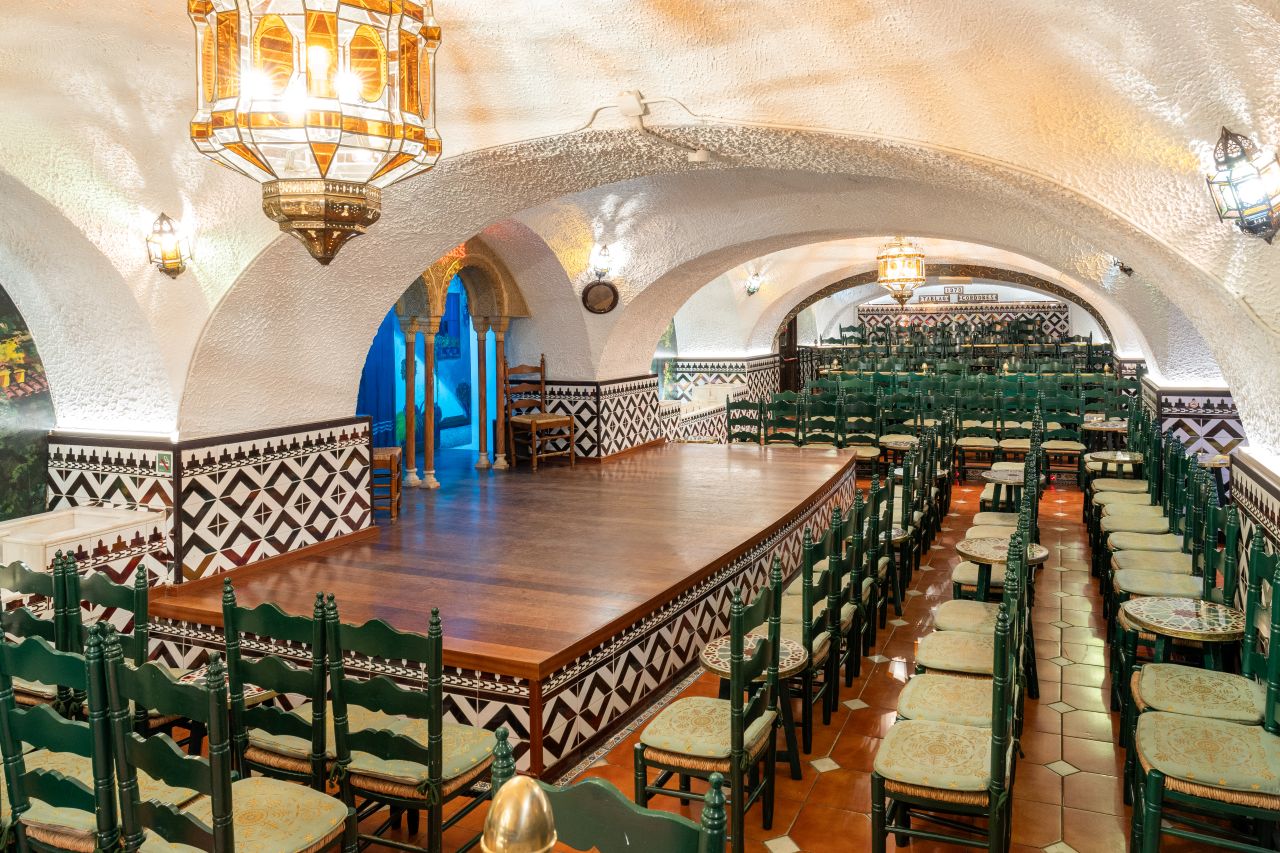
Tablao El Cordobés (Barcelona)
Established in 1970 on Las Ramblas, this is Barcelona’s most iconic tablao. Artists such as Farruco, Tomatito, Duquende, Eva Yerbabuena, Karime Amaya, and Sara Baras have performed here. The venue recreates a traditional Andalusian cave with arches and mosaics for a cozy ambiance. Guests enjoy a high-quality buffet blending Catalan and Andalusian cuisine—escalivada, “pa amb tomàquet,” fresh seafood, and hearty stews.
Tablao Flamenco La Alegría (Málaga)
Located at Muelle Uno with sea views and facing the Alcazaba, this tablao merges flamenco with coastal charm. Featuring nightly shows by top-tier performers, many with credentials from major Andalusian festivals, it offers a fresh yet intimate setting. Decorated in Mediterranean tones, the restaurant serves local specialties like pescaíto frito, lemon-marinated anchovies, grilled sardines (espetos), and wines from the Axarquía region. Summer months bring special themed cycles.
Taberna Flamenca Pepe López (Torremolinos)
Since 1965, this venue has been a flamenco staple on the Costa del Sol. Founded by flamenco advocate Pepe López, it has welcomed stars like Antonio El Pipa, La Lupi, and emerging talents. With its original decor—lanterns, rustic tables, straw chairs, and central stage—it offers a warm, authentic vibe. Traditional dishes include gazpacho, Spanish tortilla, wine-braised chorizo, and fresh fish. Programming aligns with the tourist season and is great for groups.
Peña La Perla de Cádiz (Cádiz)
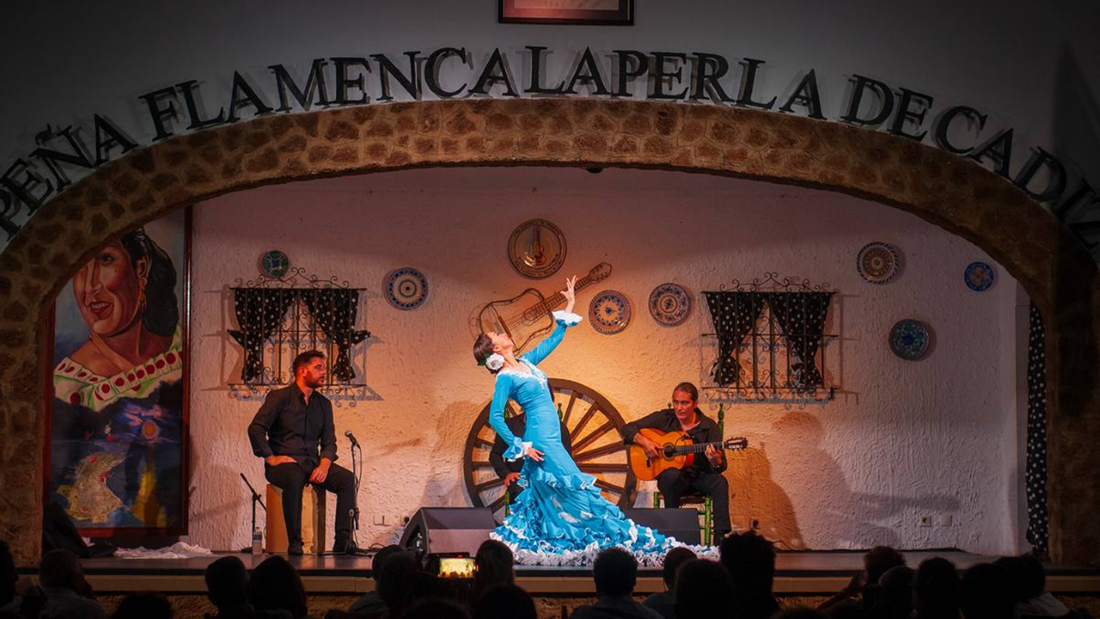
Named after the legendary cantaora La Perla de Cádiz, this flamenco club was founded in the 1980s and is a cultural gem of the Bay. Its stage has hosted Mariana Cornejo, Juan Villar, Jesús Méndez, and emerging artists. It runs year-round programs, including competitions, educational recitals, and special cycles focused on female flamenco voices. The in-house bar-restaurant serves Cádiz favorites like fried cuttlefish, local stews, “papas aliñás,” and sherry wines. The atmosphere is familial and deeply rooted.
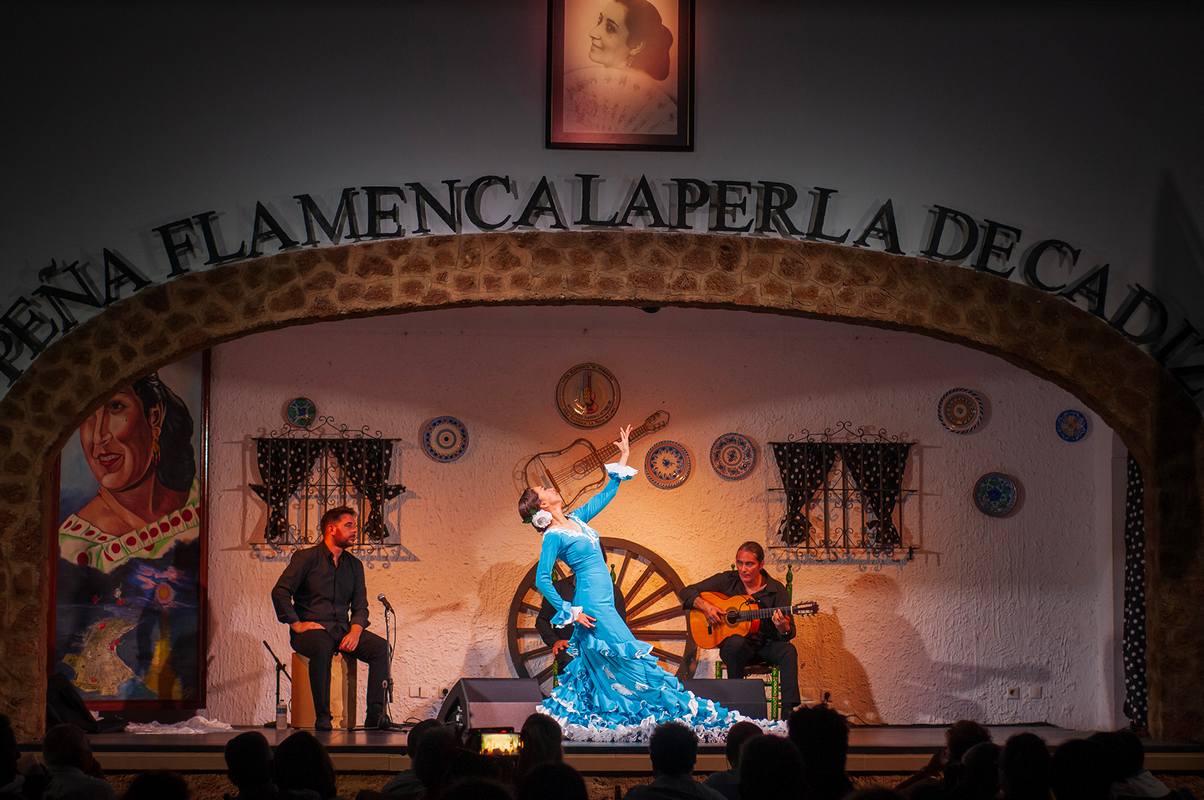
Peña la Perla de Cádiz
City-by-City Tablao & Culinary Comparison
| City | Venue | Signature Cuisine | Experience Style |
|---|---|---|---|
| Granada | Tablao Albaizyn | Tapas, oxtail stew, local wines | Intimate with a view |
| San Fernando | Venta de Vargas | Fried seafood, stews, coastal cuisine | Historic and soulful |
| Madrid | Corral de la Morería | Fine dining, tasting menus | Flamenco meets haute cuisine |
| Madrid | Tablao Villa Rosa | Traditional Madrid dishes | Classic and full of character |
| Barcelona | Tablao El Cordobés | Catalan and Andalusian cuisine buffet | Cultural and accessible |
| Málaga | Tablao La Alegría | Mediterranean fare, grilled sardines | Seaside artistry |
| Torremolinos | Taberna Flamenca Pepe López | Andalusian home cooking | Coastal flamenco tradition |
| Cádiz | Peña La Perla de Cádiz | Local seafood dishes, sherry wines | Community-based flamenco |
Tips for Enjoying the Experience
- Book in advance: Dinner + show packages often sell out quickly.
- Check the artist lineup: Performances vary by day and feature both established and emerging talent.
- Ask for wine pairings: Many venues offer curated wine or tapa pairings.
- Arrive early: Settle in, enjoy the venue, and immerse yourself in the atmosphere.
Frequently Asked Questions (FAQ)
Which tablao offers the best flamenco + dining experience?
It depends on your preference. For a luxury experience, Corral de la Morería is world-renowned. For something more authentic and close to the roots, Venta de Vargas or Peña La Perla in Cádiz deliver soul-stirring performances paired with traditional flavors.
Can I enjoy flamenco even if I don’t understand it?
Absolutely. Flamenco is an emotional art that transcends language and culture. A cry, a guitar strum, or the rhythm of footwork can deeply move anyone. Food and wine only amplify this sensory immersion.
Are tablaos just for tourists?
Not at all. Many tablaos, especially peñas, serve local communities and host serious flamenco programming. While some cater to visitors, others are true cultural centers with deep roots in their neighborhoods.
Is dining at a tablao expensive?
There are options for various budgets. Some offer complete packages from €40–50, while others like Corral de la Morería offer gourmet experiences over €100. You can often choose show-only tickets or combine with drinks and tapas.
Want more flamenco experiences? Visit ALL FLAMENCO for exclusive performances recorded at many of these legendary venues.