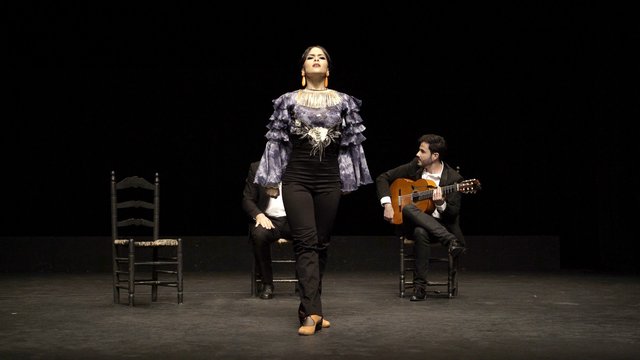
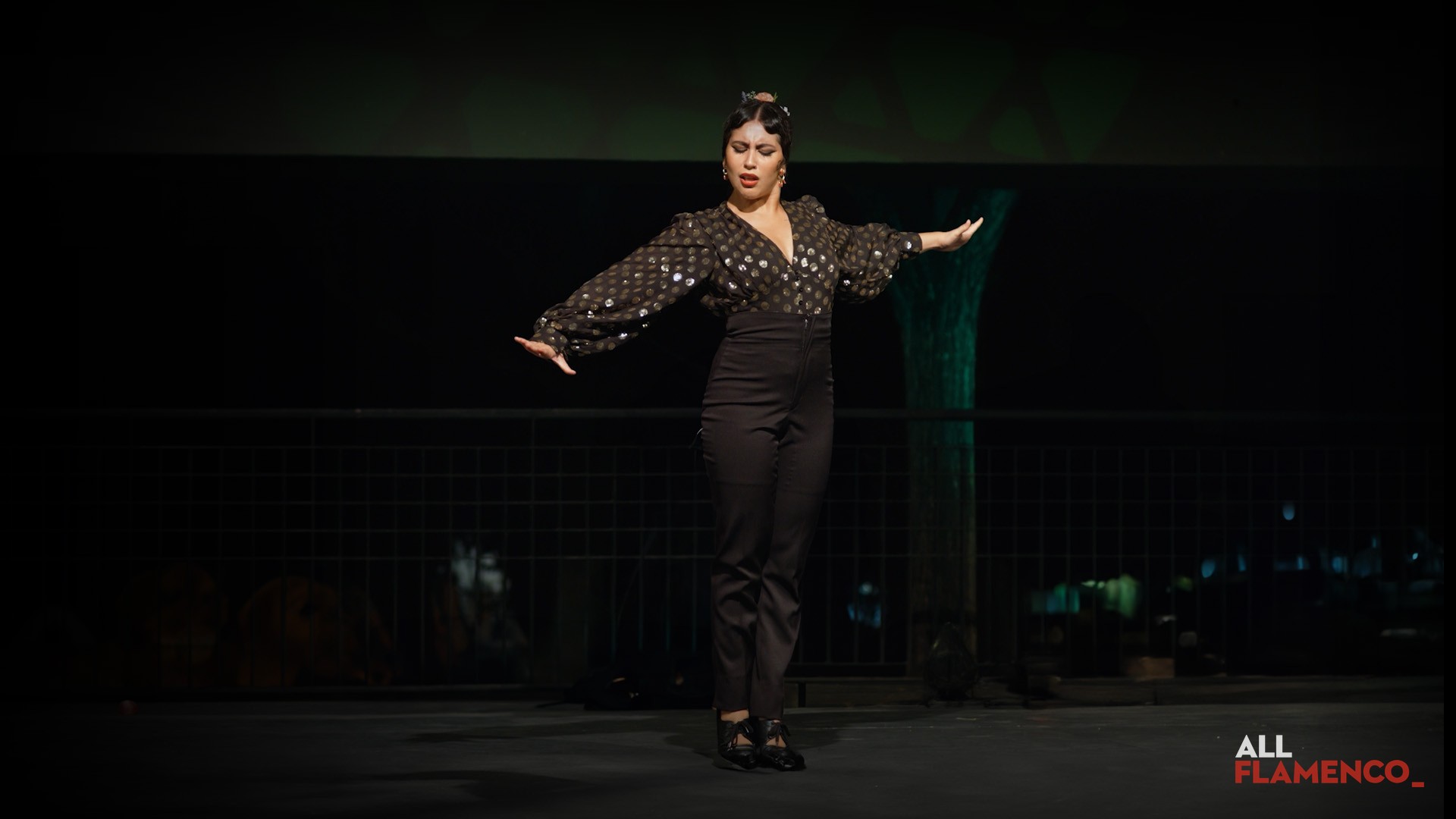
Flamenco dance has no birthday. It has a place —Andalusia— and a long stretch of time: between the 15th and 18th centuries several ways of singing, playing and moving came together there that were not yet flamenco, and out of that mixture this came. Nobody invented it one afternoon.
What follows tells that story in order: where it starts, which cultures gave it a body, at what point it stopped being a household thing and turned into a trade, who took it into the theatre and who dances it today. With one difference from what an encyclopaedia can offer: the last stretch of this story is on film, complete, and you can watch it.
Where and when flamenco dance was born
Andalusia, between the 15th and 18th centuries. The bracket is deliberately wide, because there was no founding moment: there was a convergence. For three hundred years Gypsy, Moorish and Arab, Castilian, African and Jewish traditions lived side by side in the south, and not one of them produced on its own what we now call flamenco.
Two features of that origin explain almost everything that came afterwards. First: the singing came before the dance. The body did not arrive to lay choreography over music, it arrived to answer a lament, and that relationship —dancing to someone who is singing, rather than with an accompaniment— is still the backbone of the trade. Second: it grew indoors, in courtyards, in caves and at family gatherings, improvised and for very few people. By the time it finally stepped onto a stage, it was already formed.
That is why «who invented flamenco dance?» has no answer and «what is it made of?» does. If that is where you want to start, the complete guide to flamenco palos takes it apart piece by piece.
The cultures that gave it a body
The word people always reach for is «fusion», and it has been used so often that it no longer says anything. It is worth naming what each current contributed, even roughly, because you can still hear it when somebody dances.
From the Arab and Moorish world come the expressiveness and a rhythmic richness that the body ends up borrowing from the voice. From the Gypsy tradition, the visceral character and the way it travels: family to family, with no school and no paper. From African music, complex rhythm and body percussion. And from Castilian and Andalusian folklore, steps and choreographic structures that whole palos grew out of: sevillanas are the clearest case, and that is why they are still the first thing almost everyone learns —it is set out in dancing sevillanas—.
All of this was handed on by ear and by eye for centuries, without a single score, and only settled into something recognisable in the late 18th and early 19th centuries. An art that was never written down is an art that only exists while somebody is doing it in front of somebody else. That, underneath everything, is why filming it matters.
The cafés cantantes: the century when dancing became a trade
The 19th century is the hinge, and it is where the first documented appearances turn up. The cafés cantantes —venues where people paid to see and hear flamenco— turned a domestic practice into a job. The moment somebody is paid to dance, everything changes: a repertoire appears, competition appears, and the professional bailaora appears.
That is where the first names history held on to sit, Juana la Macarrona and Pastora Imperio, and that is where forms still recognisable at a glance were fixed: the farruca, the zapateado, the bulerías and the alegrías.
Of those four, bulerías are the one that best explains the mechanics of flamenco as a whole, because compás, improvisation and party are all visible in them at once; the complete guide to bulerías dance works them through with their rhythm and their key figures.
From tablao to theatre: what changed in the 20th century
In the 20th century flamenco dance did two things at once: it professionalised completely and it went on tour. Companies were founded, shows were choreographed, theatres were played and Spain was left behind, and theatre and cinema did the rest. With that came a problem that had not existed before: how do you sustain for an hour and a half, in front of a thousand people, something born to last as long as one song in one room. The answer was the school: for the first time there was a method and there was somewhere to learn.
Four names solved that question: Vicente Escudero, Antonio Gades, Carmen Amaya and Antonio el Bailarín.
Carmen Amaya has a whole story of her own here —a dancer who came out of a shack and ended up in Hollywood—, told in her biography and with her artist page in the catalogue.
The names worth knowing
From here the list gets long, so it is ordered by what each one contributes rather than by seniority.
On the side of the school and of purity, Matilde Coral, Manuela Carrasco and La Chana. On the side of family inheritance, Farruquito. And on the side of whoever breaks the thing open, Rocío Molina, which is where flamenco dance crosses contemporary dance and stops resembling itself without ceasing to be itself.
And in the 21st century, the generation filling the festivals now, all of them filmed in this catalogue: Eduardo Guerrero, Rafaela Carrasco, Belén López and Fuensanta La Moneta, plus Sara Calero, Macarena Ramírez, Concha Jareño and Marcos Flores.
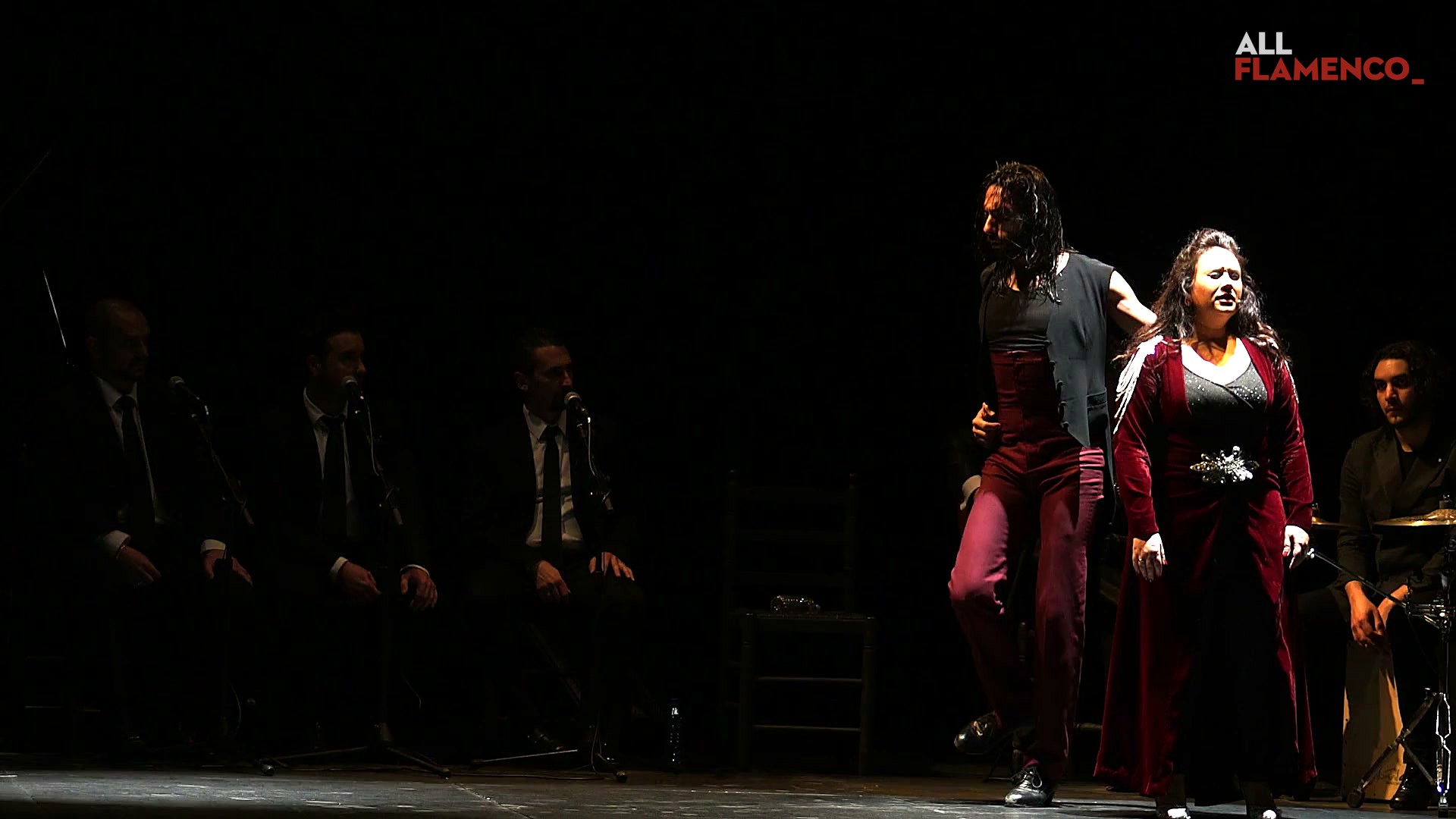
What gets danced: every palo asks the body for something else
There is no such thing as «flamenco dance» in the singular. There are four ways of framing it and as many dances as there are palos, and this is the part that explains worst in writing and best by watching two of them back to back.
The four framings: the traditional or classical, restrained and faithful to the old forms; the theatrical, with dramaturgy, costume and company; the experimental, which breaks the structure on purpose; and the festive, which lives off improvisation and the room —bulerías, tangos—.
And then the palos, which give the body its orders before any choreography does. Bulerías are fast and improvised. Alegrías are bright and carry an air of Cádiz that no other palo has. The soleá is slow, deep and turned inward. The seguiriya is the severest of the lot. And the farruca is the palo of the zapateado, traditionally danced alone with all the force in the feet: you can see it in a minute in Macarena Ramírez por farruca.
Changing palo is not changing the step: the soleá asks for a closed body with the weight dropped toward the floor; the seguiriya, raised arms and a contained gesture; the farruca, all the force put into the feet; and the bulería, an open body with the eyes on whoever is nearby. That is why the same bailaora looks like a different dancer from one palo to the next, without changing technique.
For the seguiriya danced, there is a young and very clear example here: Claudia la Debla, from Granada, at the Dance Night in the Park of the La Isla Ciudad Flamenca festival, and in her dance recital at a neighbourhood club. Both are the same dancer in two different formats, which is exactly what this section is about.
Where to watch full flamenco dance today, not fragments
On 16 November 2010, in Nairobi, UNESCO inscribed flamenco on the Representative List of the Intangible Cultural Heritage of Humanity. That did not change how it is danced: it changed who is watching. There are now academies, companies and flamenco audiences in places that had none fifty years ago —from Tokyo to New York and from Paris to Buenos Aires—, and the Japanese case is large enough to have an article of its own.
It also changed where you can watch it. The ALL FLAMENCO catalogue holds a wide collection of filmed flamenco, and for dance there are five full shows, not fragments:
- «¡Vamo’ allá!», by Flamenconautas, from the 22nd Festival de Jerez. It is an international company, and there you see in one go what the UNESCO listing means in practice: dancers from several countries doing this in Jerez.
- «Nacida sombra», by Rafaela Carrasco. Theatrical dance with dramaturgy: the show model the 20th century built, taken all the way.
- «Petisa Loca», by Sara Calero, also from the 22nd Festival de Jerez.
- Macarena Ramírez dancing at the Jerez Off. A dance recital and nothing else, no company and no plot, which is the hardest test there is.
- «Honores a la Cañeta de Málaga», with La Farruca dancing. A tribute where pure dance shares the stage with singing and guitar, and where you see what the family inheritance of the previous section is actually for.
And if what interests you is the escuela bolera and the castanets, which is the other half of this story, there is «3DEUNO», by Emilio Ochando and company.
To watch any of it in full you need to subscribe.
The essentials about the origin of flamenco dance
Where and when was flamenco dance born?
In Andalusia, between the 15th and 18th centuries, from the crossing of Gypsy, Arab and Moorish, Castilian, African and Jewish traditions. There is no founding date: there was a slow convergence. It was born tied to the singing and in private settings —courtyards, caves, family gatherings— and only settled into something recognisable in the late 18th and early 19th centuries.
When did it become a profession?
In the 19th century, with the cafés cantantes, the first places where people paid to watch dancing. Professionalisation was completed in the 20th century with companies, theatres and international tours, and there Vicente Escudero, Antonio Gades, Carmen Amaya and Antonio el Bailarín were decisive.
What styles of flamenco dance are there?
Four ways of framing it —traditional, theatrical, experimental and festive— and as many dances as there are palos. The most recognisable are bulerías (fast and festive), alegrías (bright), the soleá (slow and deep), the seguiriya (the severest) and the farruca (the one with the zapateado).
Where can you watch top-tier flamenco dance today?
At the festivals —Jerez and the Bienal de Sevilla are the two big dates— and in the tablaos of Madrid and Andalusia. And on film, in the ALL FLAMENCO catalogue, with complete dance shows, in Spanish, English and Japanese.